
Edge issue 430 is the first account of GTA 6 running live rather than cut into a trailer. Rob Nelson played the build unscripted for 90 minutes while Simon Parkin took notes, and Aaron Garbut and Phil Hooker filled in the history: a Miami scouting trip in 2015, a story held back until RDR2 shipped, weather built from wind, humidity, fog and season, and a studio that feels it has “built a pyramid on Everest”.
- Rob Nelson played the current build for 90 minutes at Rockstar North in Edinburgh with no demo script; the piece is free on GamesRadar with a free account.
- Development history on the record: a small group scouted Miami in 2015, the story waited until RDR2 was done, and Sam Houser still reviews every milestone over a couple of weeks.
- Weather is driven by wind, humidity, fog, time of day and season, with storms you can watch form, surfaces that dry at different rates and aircraft that take light damage in severe conditions.
- What Edge does not say: which PS5 the build ran on, any frame rate, or where the shipped game actually begins. The reviews on November 18 settle those.
Ninety Minutes With Nobody Steering
Edge issue 430 went on sale on October 29 with Jason and Lucia on the cover and Simon Parkin’s report from Rockstar North inside, under the title “The state that never sleeps”. The magazine was let into the Edinburgh studio, and Rob Nelson, one of the three heads of development, picked up a PS5 controller and simply played the current build for 90 minutes while Parkin watched. No demo script, no reel cut together by the marketing team. Aaron Garbut and Phil Hooker, who share the head of development title with Nelson, were interviewed alongside him.
That format matters more than any individual detail. Every other look at GTA 6 so far has been something Rockstar edited: three trailers, screenshot drops, an official site. This is the first time a journalist has described the game running live, with a developer losing a motorbike to a stinger strip because he did not see it in the dark. The piece is free to read on GamesRadar with a free account, so we are not going to retype it. What follows is what we think it adds, and what it does not say.
A Small Group Went to Miami in 2015
The history section is the part most previews have skipped. In 2015 Nelson led a small group to Miami to work out what a return to Vice City might look and feel like, flagging places and bits of Florida culture for larger research teams to chase later. At that point Red Dead Redemption 2 was still in production, and Rockstar deliberately held back on committing to Jason and Lucia’s story until that game was finished. The two projects overlapped for several years before the bulk of the company turned to Leonida, and Parkin sums the whole thing up as “ten years of accumulation, iteration and argument”.
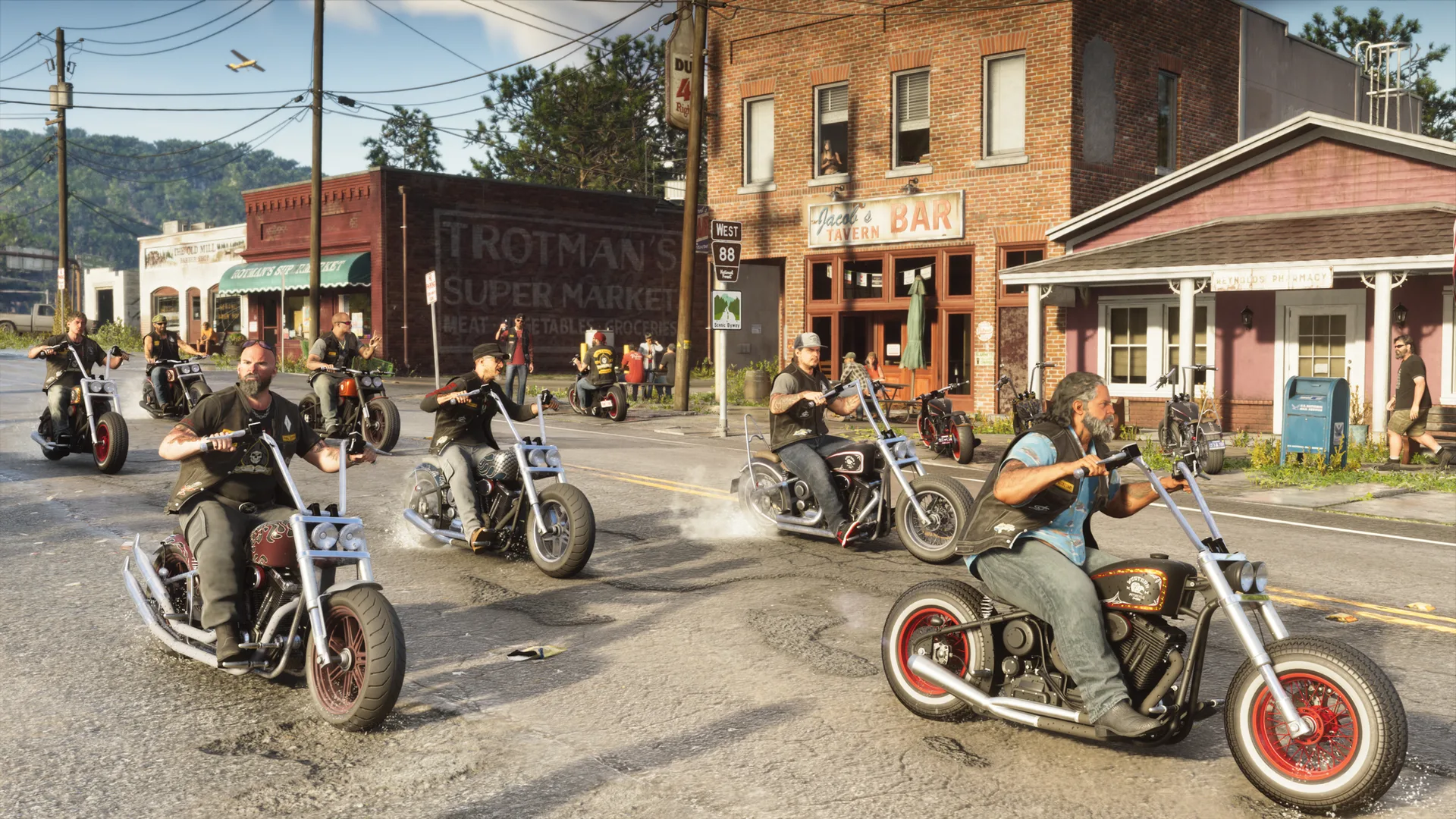
The division of labour across the studios is also spelled out more clearly than before. Rockstar Los Angeles devoted an entire team of writers, directors and producers to making individual pedestrians feel like people, Rockstar Toronto took a leading role in world population and research, and Rockstar San Diego helped drive the ambient and interactive events you stumble into on the road. Sam Houser, Edge says, remains involved in every part of the creative side: he and Nelson regularly play the game together and spend a couple of weeks evaluating each milestone, with notes on lighting, animation, audio, story, tone and mechanics going back to the relevant teams. The studio works in six to eight week milestones, stabilises the build at the end of each, and a smaller group reviews it whole and produces “thousands and thousands” of notes.
Weather With Its Own Opinions
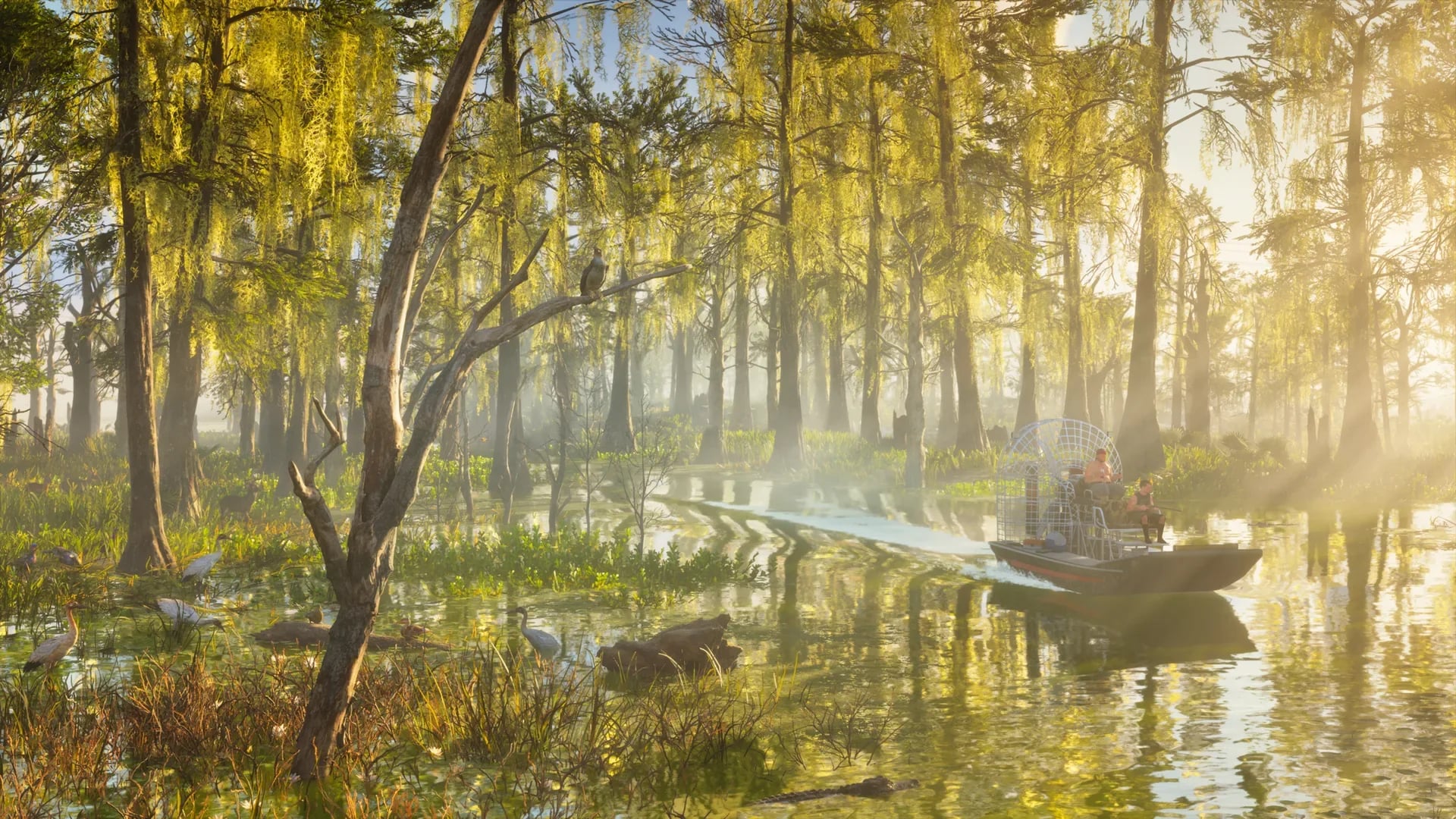
The clearest new system in the piece is the weather, and Garbut is the one explaining it. “Generally speaking, it’s either rainy or sunny or whatever,” he says of earlier games. “This game is much more granular.” Cloud systems move independently, shaped by wind, humidity, fog, time of day and season. You can stand in sunshine and watch a storm build on the horizon, dark cloud, lightning and the grey haze of falling rain, then drive into it. Roads get wet as you approach, buildings keep dripping after it passes, and different surfaces dry at different rates.
Wind pushes trees, clouds and waves, and islands and buildings shelter stretches of water, so a bay behind a key behaves differently from the open Atlantic. “Depending on where you are in your boat, you’ll skip over that stuff or get really rocked around by it,” Garbut says. Fly a plane or helicopter through a storm and it gets buffeted; stay in severe weather long enough and the aircraft takes light damage. Pedestrians look for shelter as conditions worsen. “Everything comes down to these granular levels, and then it just interacts.”
The clock has slowed down to match. GTA 5’s brisk day-night cycle has been “extended substantially”, with lingering sunsets and longer nights, and Nelson says the team tested GTA 6 on GTA 5’s timings and “everything felt too fast”. That single word, season, in Garbut’s list of weather inputs is the one we would like a follow-up on. Edge does not expand on it, and neither has Rockstar, so for now it is a variable in the sky, not a confirmed calendar.
The Chase, As Edge Wrote It
The anecdote everyone has quoted is the botched robbery. Nelson flees on a stolen motorbike with Lucia on the back. In these moments the player can switch between the two, handing the getaway to the other character while taking control of the passenger to shoot at pursuing cars. “It’s AI,” Nelson jokes, “but the good, old-fashioned sort.” Up ahead the police radio each other and lay a stinger strip across the road, almost invisible at speed at night. Nelson misses it, the front tyre blows, both riders go over the handlebars, scramble up and limp away, and a K9 unit joins the pursuit. The Alsatian closes the gap almost immediately and pins Jason to the ground while everyone in the office tells Nelson not to shoot it.
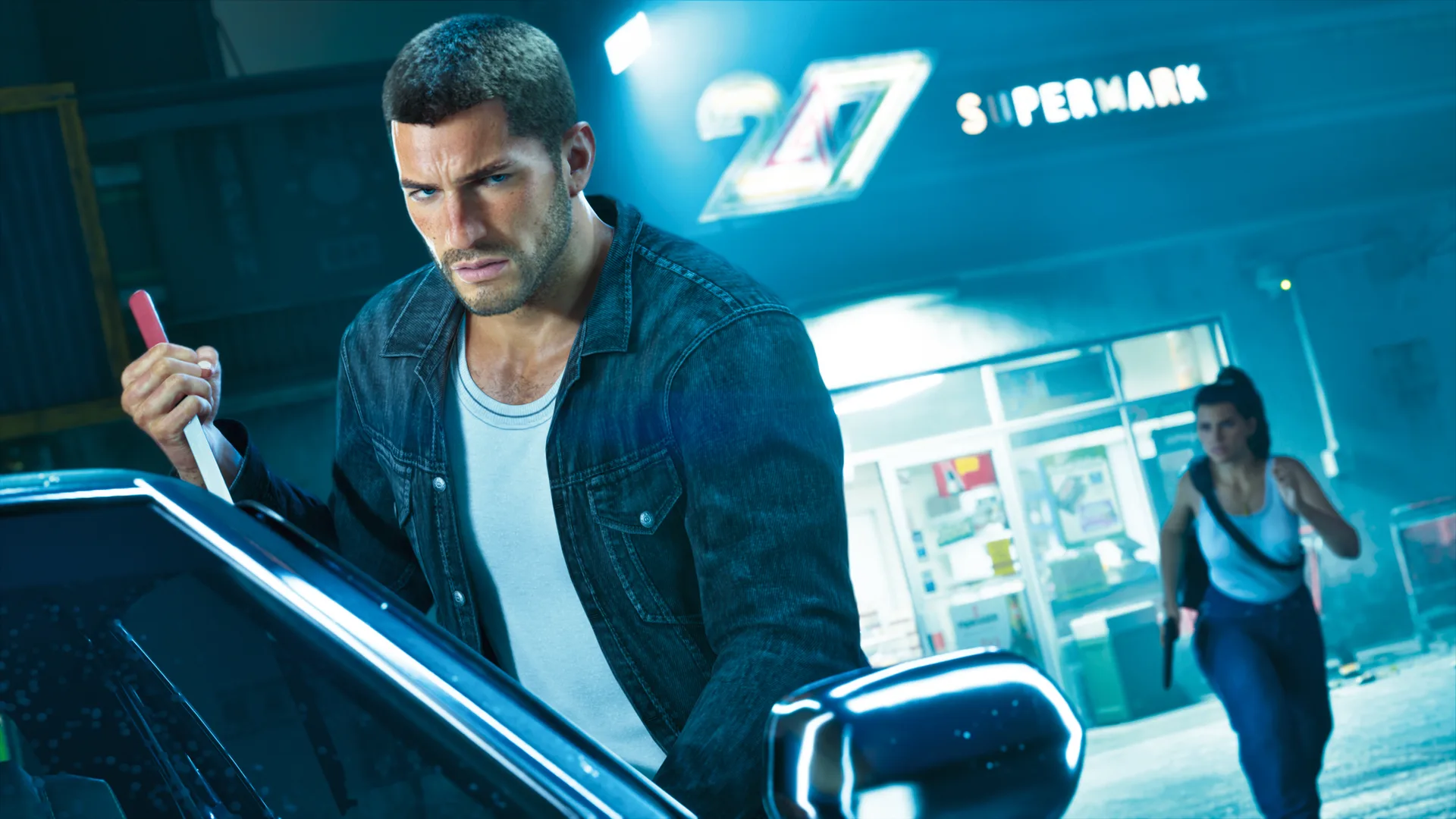
We folded the mechanics of that sequence into our wanted system guide the week the issue landed, so we will not repeat the heat icons and the evidence-shedding here. Two smaller things from the same passage are worth pulling out. First, the open-carry rule: walking around holding a shotgun can be enough to disturb the peace, pedestrians notice whether it is slung on your back or carried in your hands, and crowds edge away, scatter or occasionally challenge you. Second, the simulation tracks whether anyone actually saw what you did. A crime with no witnesses is a different problem from a crime on CCTV, and that is the hinge the whole police response turns on.
Smell, Interiors and the Bus That Always Turns Up
The oddest system in the feature started as a one-off. Developers built a disgust reaction for a specific piece of explorable content, then widened it so other locations can trigger varying degrees of revulsion. Garbut’s example is a house he had never been into: one room full of affectionate photographs of a family dog, the next room showing what the dog had done while left alone. “The whole place was trashed,” he says. Jason reacted to the smell without anyone scripting it, because by then the reaction belonged to the world rather than to one scene.
The scale numbers from the piece are already in our guides, so briefly: around 600,000 animations, every one of them art-directed, and “an order of magnitude more interiors” than the previous games, which we unpacked in the interiors guide. The map line is the one we had from Rockstar before, roughly twice GTA 5, with a total landmass nearly as large as the playable maps of GTA 4, GTA 5 and RDR2 combined. The detail that made us smile is Hooker’s. He is the lead responsible for driving the game to stability, and he is obsessed with the buses. “I’m obsessed with making sure they always turn up,” he says. “Anywhere in the middle of playing, I’ll just go: right, we’re going to get the bus to where we’re going. I’ve memorised all of the routes.”
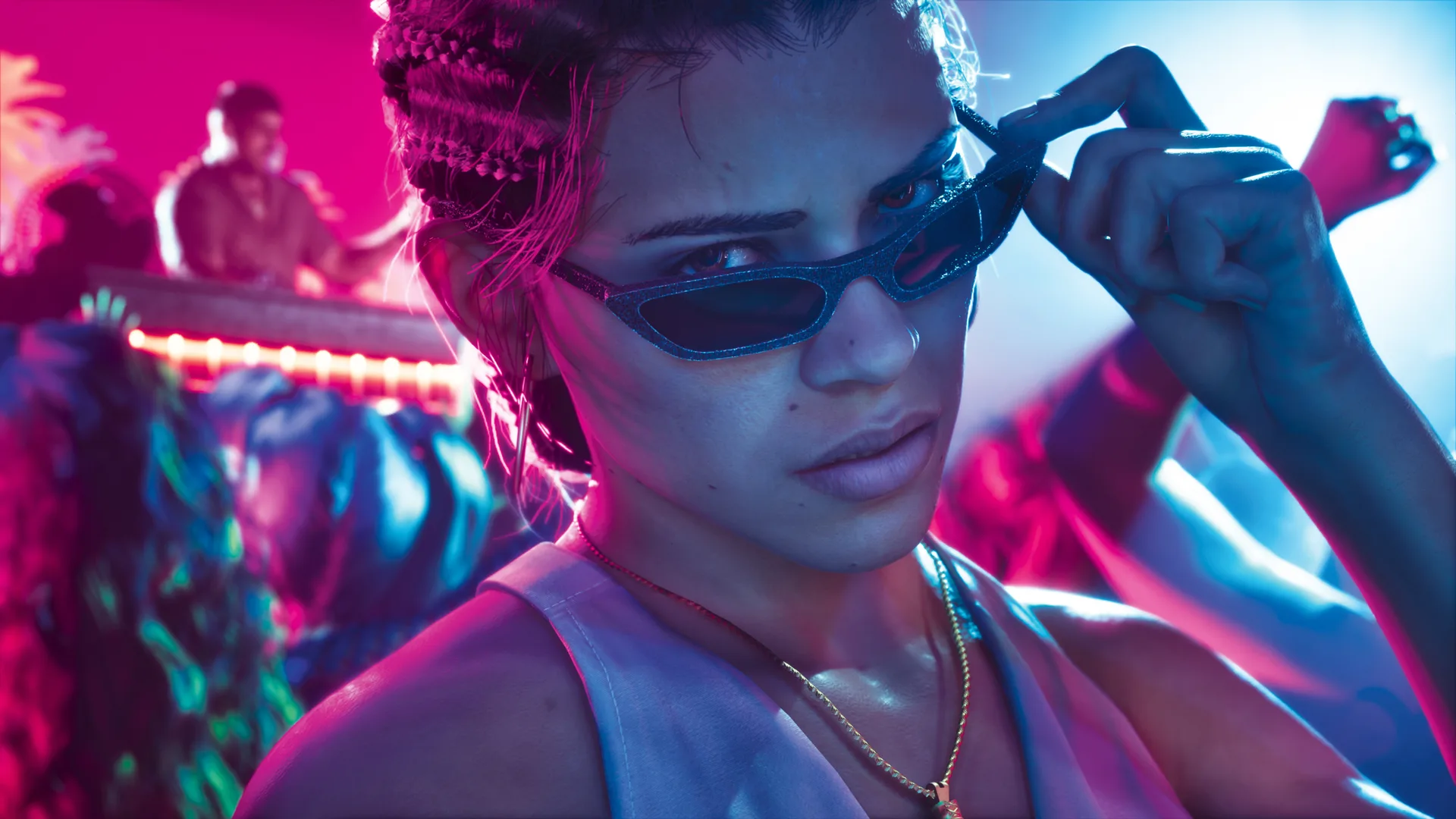
If you want the rest of what Edge reported, it is spread across the pages where it belongs rather than piled up here: the four-stage closeness scale in the relationship guide, the angel-and-devil profile in the criminal profile guide, the pedestrian traits in the living world guide, and the carry limits and lockers in the stats guide. All twelve of the magazine’s screenshots are in the screenshots gallery, filed under Edge magazine.
A Pyramid on Everest
The feature ends on the three leads talking about letting go, and it is the most candid Rockstar has sounded in this campaign. Garbut: “We’ve not compromised on the scale, the detail, the interactivity, the story, the open world. I feel like we’ve built a pyramid on Everest.” Hooker: “I can’t guess the public reaction. We’ve made what we wanted to make.” Nelson, setting the controller down: “It’s ready. It ceases to become ours, and it becomes everybody’s.” Then, Parkin writes, “there’s a letting go.”
Our view: the piece is a feature, not an audit, and it should be read as one. Parkin is a careful writer and the systems he describes line up with the trailers and the official site, but there is a list of things the article does not tell you. It never says which PS5 the build was running on or at what frame rate, so claims about either are not from Edge. It does not say the game opens in that small shared apartment, only that the demo did. And it has no release-build caveats at all, because it was written about a studio build in October, not the disc that ships on November 19. Treat it as the best account yet of how the game feels in a developer’s hands, and leave the technical verdicts to the reviews on November 18.
Discussion
Comments · Edge 430 cover story
No comments yet.
Loading comments…