
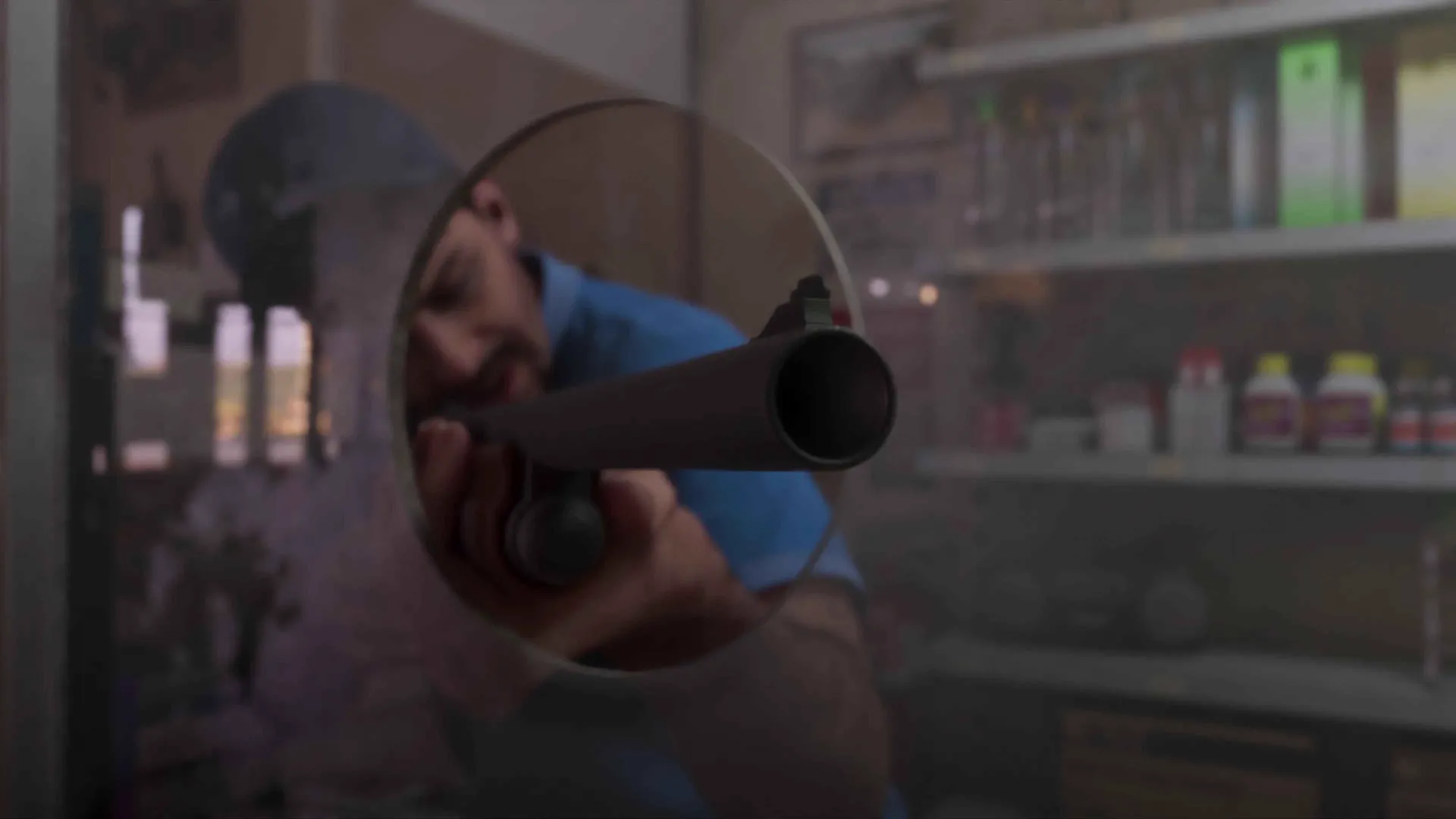

Rockstar says you can rob any store you can walk into, and the loop behind that claim runs five target tiers, a greed versus speed choice at every safe and a fence for every kind of loot. This guide breaks down the tiers and the fencing routes.
- At least one shop stores its CCTV footage in the cloud, per Kinda Funny, so destroying the camera does not always destroy the evidence, and a safe code bought from a fence may be a police setup, per one breakdown of the 2022 leak’s debug entries.
- Rob Nelson says you can try to rob any store you can walk into, not just the targets blipped on the map.
- Free-roam robbery runs at least four tiers, five counting heists: local stores, payday lenders, jewellery stores, banks and gang compounds.
- Every safe poses the same question, greed versus speed: blow it fast and damage the loot, or hunt the code while police pressure builds outside.
- Loot is physical. It fills duffel bags, rides in whatever your vehicle can carry and only becomes money at a type-specific fence.
- Money now gates the story. Rockstar will pause mission flow until you hit certain cash goals, so the robbery loop is load-bearing.
The Claim Rockstar Puts on the Table
Start with the exact words. Rob Nelson, on the Extended Look’s robbery montage: those are three robberies cut together, you can do them all over the open world, by yourself or together, and making money this way off mission is an important part of the game. That is the claim on the table: robbery as the load-bearing money loop, not a side activity. IGN’s hands-on lists the main income streams as boosting and selling cars, holding up businesses, robbing stores and executing bank heists, with any target approachable by Jason or Lucia solo or as a couple, and jobs done together counting towards the relationship.
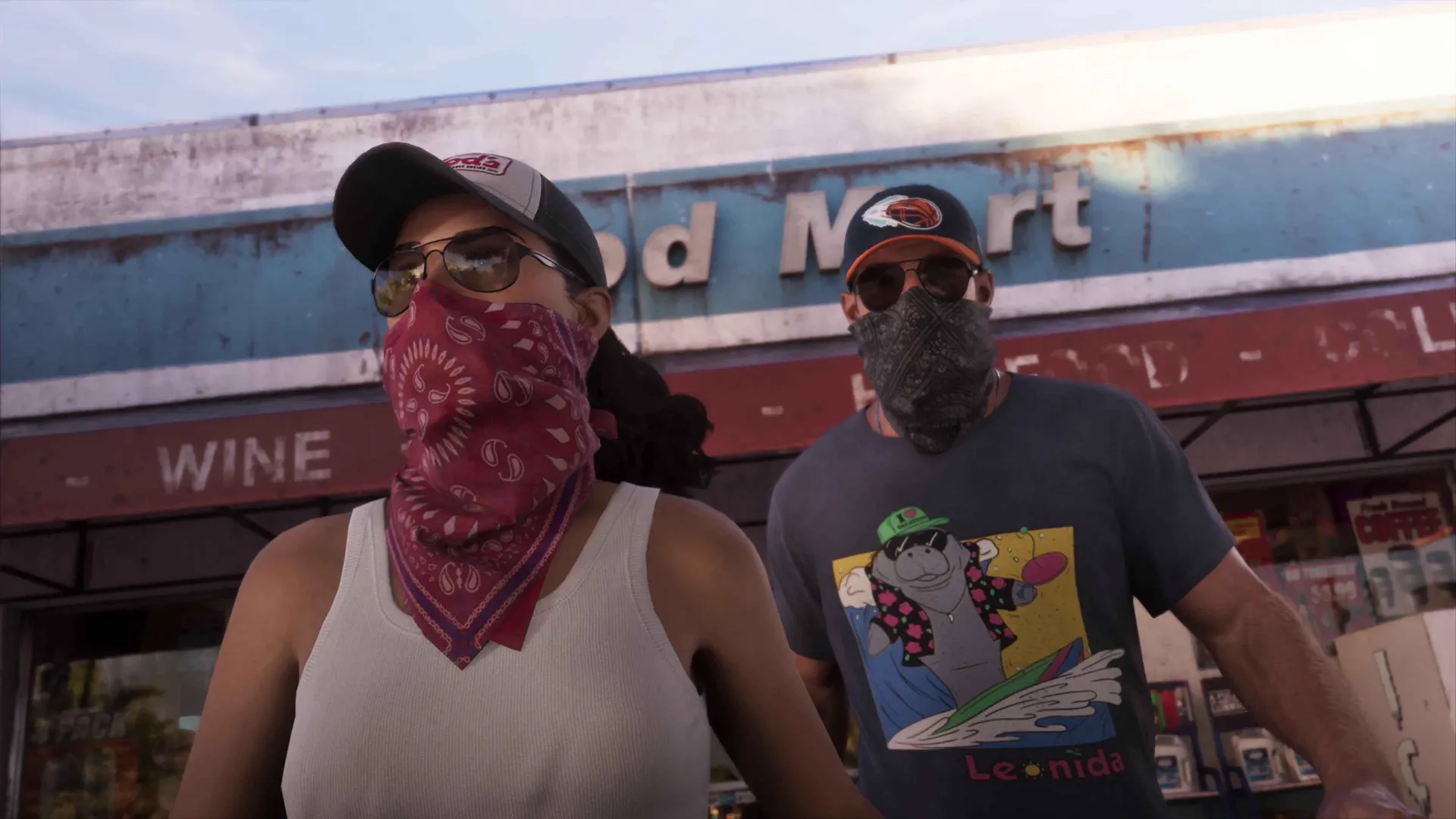
The montage reaches back through the leak era on purpose: the Hank’s Waffles diner robbery is a direct callback to the 2022 leak, and that history lives in the leaks guide. The design brief underneath, per Nelson, is one question, what if the player does something different, can we allow for it, and the stated result is robberies where even Rockstar does not know what will happen. A montage is a receipt for one thing only, and it is not the payout table. The working underneath it is the rest of this page.
Five Tiers From Corner Stores to Compounds
The tiers are on the record. Creators who played at Rockstar North count at least four tiers of free-roam robbery, five levels counting heists: local stores at the bottom, phone repair shops and convenience stores expected to pay a couple of thousand at most, then jewellery stores, banks and criminal compounds, with heists over the lot. Nelson adds payday loan places as a middle rung and notes little gas stations do not even make the list. The montage shows three rungs on screen, a local store, a jewellery store and Lucia walking out of a bank, and Raul Bautista, billed as a mastermind bank robber, gets ribbed about his Friday morning bank robbery on pickup.
// The tier ledger
Target tiers per the Rockstar North hands-on sessions and the Extended Look. Unpriced means the previews gave no figure.
| Tier | Examples | Take | Risk |
|---|---|---|---|
| Local stores | Corner shops, phone repair | A couple of thousand | Low heat, live clerks |
| Payday lenders | Loan and paycheck shops | Unpriced | Back rooms, alarms |
| Jewellery stores | The montage jewellery job | Physical loot, bagged | Hero civilians |
| Banks and vans | Bank exit, armoured cash run | Unpriced | Heavy response, perimeters |
| Compounds | Criminal and gang compounds | Drugs or cash | Private security |
| Heists | The vault screenshot | Unpriced | Story-tier, see below |
Two rows carry flags. Compounds are numerous, found through the story flow, tips or plain stumbling across them, and hit for drugs or cash that then goes to a fence, per Nelson, with one compound exclusive to the Ultimate Edition. Heists are confirmed to exist, and one showcase screenshot puts Jason and Lucia inside what looks like a massive vault, but the reading that heists are story-only missions is a creator’s guess, flagged as such.
Any Store You Can Walk Into
Underneath the tiers sits the blanket rule. Rob says you can try and rob any store that you walk into, not just the opportunities blipped on the map, relayed near-identically by two creators who heard it at Rockstar North. Phone store, bank, convenience store, potentially a hair salon: if the door opens, it is a target. The full October IGN interview adds Nelson’s own example of the scope: you can walk into the place where you buy headphones and rob it. The leaked material puts a number on that scope, around 700 robbable stores per the leaked map readings. Leak arithmetic, not preview fact, and it sits graded row by row in the evidence ledger. Home invasions are reportedly not in the game, an inference from how few leaked-map houses carry interiors, and the sourcing is wobbly enough that I hold it loosely.
Discovery is stratified to match. Higher-tier targets can appear on the map, and hovering over a blip shows roughly what your potential take could be, and creator syntheses of the July hands-on sessions add the building layout to the same readout, rear entrance included, which turns target selection into an expected-value exercise. The bottom tier stays dark by design: low-level robberies are never blipped as robberies, and the corner gas station does not make the map at all. The rest you learn about emergently, in Nelson’s words: people approach you with a favour and a tip, someone in the story tips you off, or something out in the world leads you there. The tips channel runs on the same crowd simulation covered in the NPC AI guide, overheard pedestrians included.
Greed Versus Speed at the Safe
The core decision at every back-room safe is IGN’s phrase: greed versus speed. Blow the safe with explosives and you are fast, but the blast damages the loot inside. Hunt the combination instead and the full value is yours, at the risk of police turning up mid-job. Codes have three confirmed sources: searched rooms, pedestrians overheard on the street, or a fence texting you one, which happened to Nelson mid-session. Entry is the first fork, per Famitsu: walk in the loud way through the front or find the sneaky back way in, and kicking a door open triggers the alarm on the spot. Assembled in order, the clean version of a store job reads like this.
- Mask up outside. Bandana, sunglasses, gun tucked behind the back, the exact prep the showcase gives Lucia. A description never given is the cheapest one to clear.
- Take the room without firing. Restraint and control are what the criminal profile actually grades.
- Kill the CCTV footage. Nelson’s own words mid-robbery: destroy it, or they know what you look like when you leave. Famitsu goes further: take out the cameras and disable the security system, and a quiet register grab can pass completely unnoticed, no alarm, no heat.
- Hunt the code on a clock. A key opens the back room, a locked door wants a lockpick or the snap gun, the dedicated lock-defeating tool Famitsu’s interview names, an office may hold the combination, and every minute of searching builds police pressure outside.
- Crack, do not blow. The blast is a tax on your own take.
- Leave by the back door. Police can build up out front and wait, per IGN, and most locations offer an alternative route out.
- Know when to fold. No code, rising pressure: mask off, walk. A zero beats a shootout you did not price in.
Nelson’s live attempt at Rockstar North ran exactly that script, relayed by a creator in the room: no combo anywhere, footage destroyed, the job called in, a back room papered in photographs of feet, and a clean walk out while he narrated the gamble, if the police come in, am I going to shoot them, will it affect my criminal profile, do I care. That monologue is the whole design in one breath. The full IGN interview adds one more beat from the same demo: he was carrying explosives and left them in the bag, because the blast would have damaged part of the take.
Why No Two Robberies Play Alike
Variance is a design target here, not a marketing line. Preview reporting describes clerks who might surrender, panic, run, fight back, trigger alarms or create witness problems. Civilians can go further: clerks, security or bystanders may try and be a hero, which Nelson saw several times in his sessions, and the showcase shows a civilian grabbing Lucia’s weapon mid-robbery in a jewellery store.
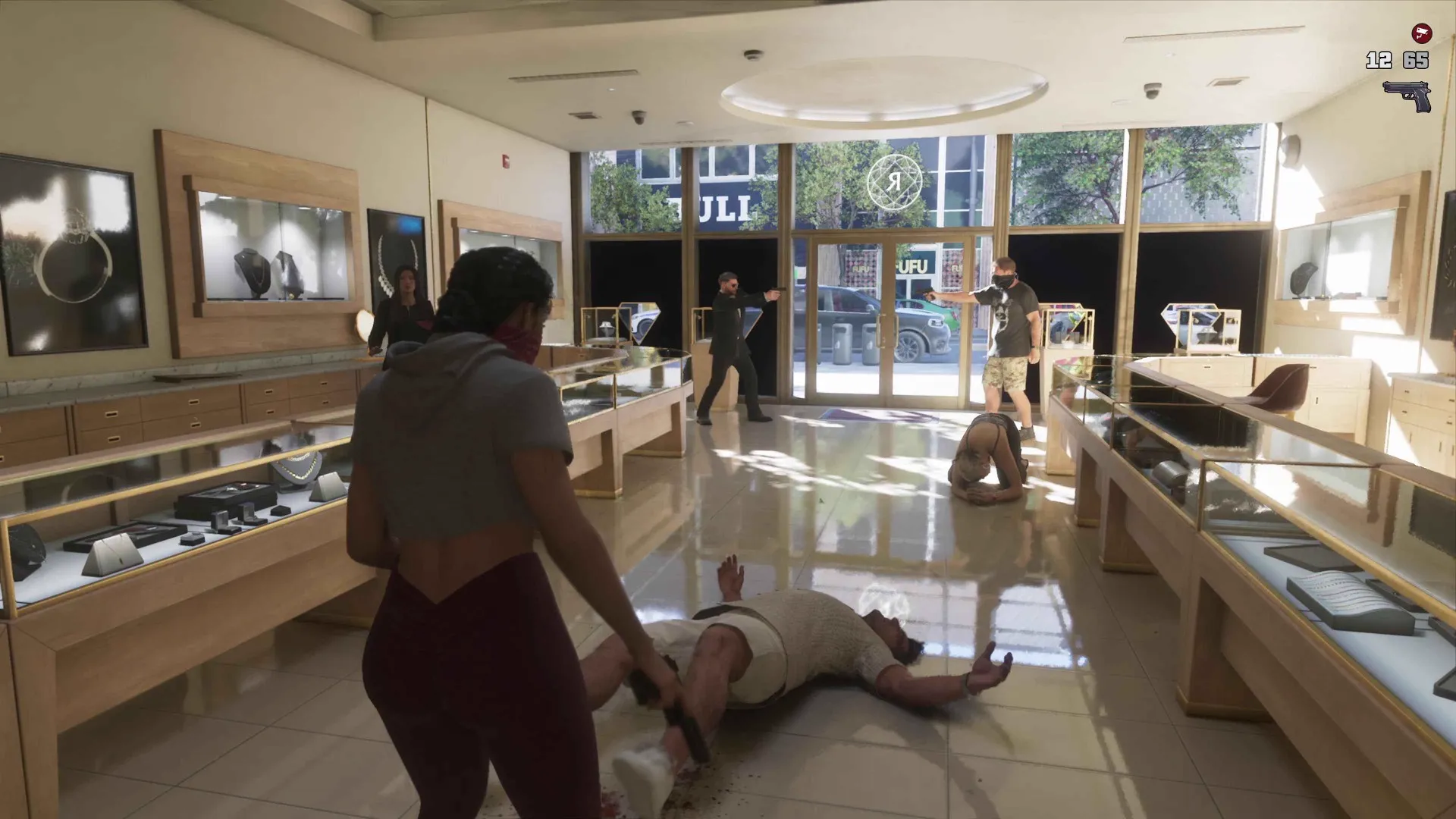
Suppression does not require killing: a yellow X hit marker means the target is down, no longer a threat, and still breathing. Even a flawless room can produce a bad exit, because the escape inherits whatever the NPCs learned, a cashier out the back door with a phone, a passer-by who clocked the rifle through the window. What the police then hold on you, icon by icon, is the subject of the wanted system guide, effectively part two of this page.
Two first-hand accounts from October show the variance working. Bloomberg’s Jason Schreier watched Rob Nelson case a bank with Lucia alongside, count three security guards and walk away from the job, then rob a gas station’s back office instead after disarming its alarm, so nobody ever responded. And in the same reporting, developer Phil Hooker describes losing two hours of a build review to an unscripted spiral: a traffic collision became a fight, a convenience-store stop became a robbery, the escape became a stolen car worth selling to a fence, and the fence’s tip pointed at the next job. One anecdote is a demo. A lead developer getting mugged by his own systems is a design philosophy.
Duffel Bags and the Getaway Maths
Money in GTA 6 runs in three ledgers: a bank balance, cash on hand, and a duffel bag value that only appears while you are carrying stolen goods. The duffel is physical. Reports describe cash, gold bars, diamonds and other valuables collected item by item and placed into bags, and the showcase shows Lucia pumping a shotgun one-handed because the other arm is full of bags, and the AI partner pulls real weight: in one relayed session Lucia held a crowd at gunpoint on her own while the player looted as Jason. The story runs the same loop: the Sanhian gang meetup for Boobie Ike ends with grab the loot, grab the duffel bag, leave.
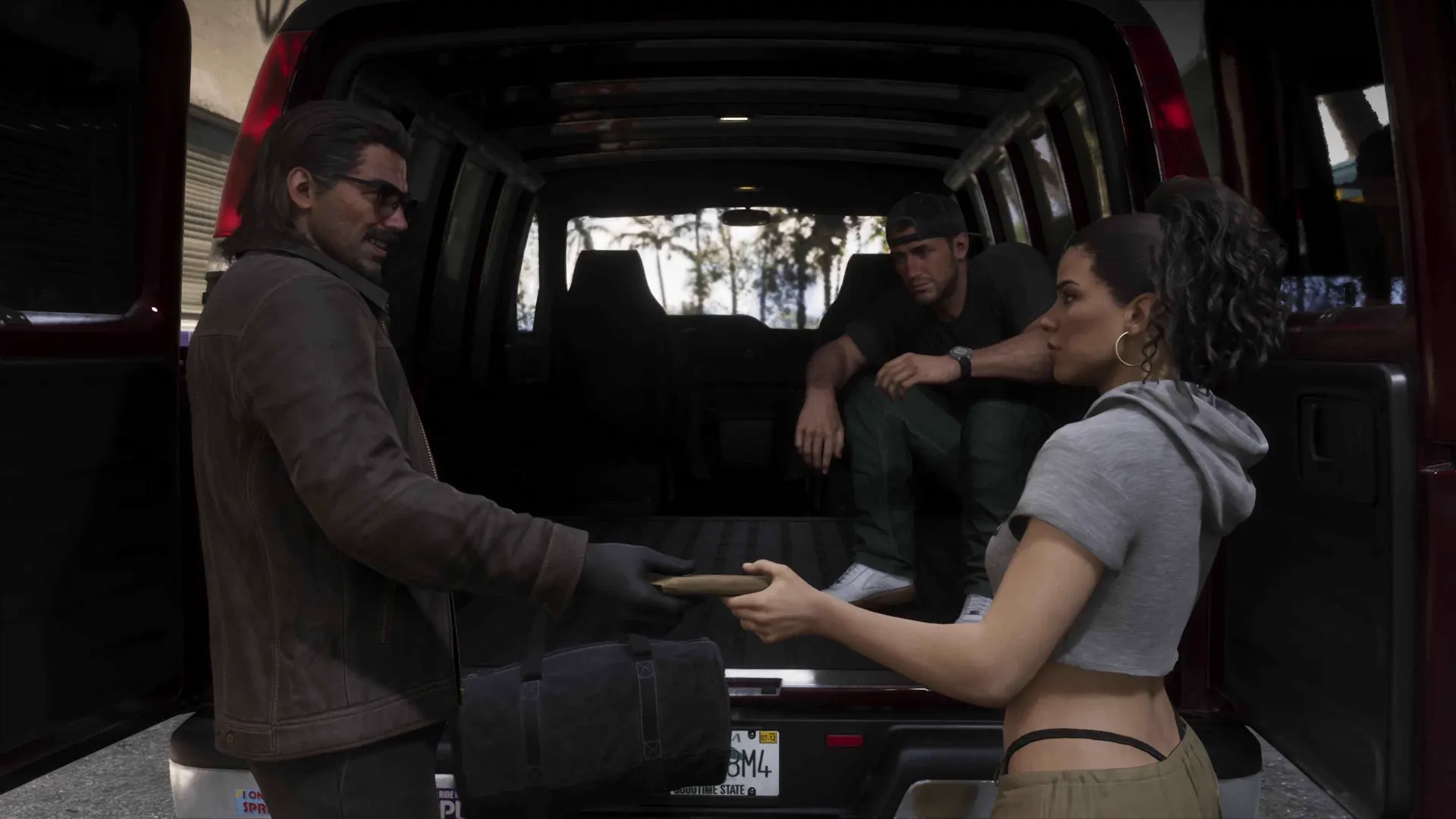
Capacity is the constraint that prices the getaway vehicle, per the hands-on relay. Motorbikes carry nothing beyond the bags on your back. Cars take a couple of bags. Vans take several, maybe four. Famitsu adds the personal limit: each character carries up to two bags, so working the job as a couple doubles what walks out the door. The duo run pays twice over, per Game Informer’s cover story: robbing together also grows the Jason and Lucia relationship itself.
Rob a high-value location on a bike and you have made a category error. Cash on hand stays exposed until you deposit it at an ATM and is lost if you die or get busted; one preview summary adds safe houses and fence drop-offs as deposit options, a detail no other account repeats, so hold it single-sourced.
The Fence Is the Real Bottleneck
Nothing in the duffel is money until a fence says so. Anything in the bag has to be taken to one, and the previews name them by type. The drug fence takes the narcotics hauled out of gang compounds. The jewellery fence buys the bagged loot from jobs like the montage’s jewellery store. The car fence buys stolen vehicles, keeps want-lists and strips trackers. More are implied for loot the previews have not shown yet.
They gate the economy twice over: fences arrive with story progression, presumably why you cannot open the game by robbing the biggest bank in the city, and they grow with use, taking higher-end cars and stripping higher-end trackers as the relationship builds. The car pipeline is the best documented. Randy, a named car fence, keeps a want-list of specific cars; a fence hunting vehicles can hand you the code to a police impound full of boostable stock, per IGN; and damaged deliveries are worth less. The tooling is stratified to match: a phone app the previews call Wank, spelled WAINK in one breakdown, scans a car for value, registration cost, locks, alarms and trackers; older vehicles open with a simple slim jim, modern prestige cars demand a key cloner that starts the engine without tripping the alarm, and per Nelson not every vehicle can be hotwired. Occupied cars can still be jacked the old-fashioned way, and stolen cars can be registered as personal vehicles for a fee, though high-end registrations are locked early on.
Money Now Gates the Story Itself
The last piece makes all of this mandatory. Nelson says the game will at points slow or stop the story flow until you hit certain cash goals, and IGN’s version is that you must sometimes raise capital before main missions continue. Rockstar has acknowledged the GTA 5 problem this corrects: characters finishing that story on more than thirty million dollars with nothing worth buying. No purchasable safe houses this time either, Jason and Lucia are on the run, though low-key garages can be bought to stash cars.
The loop, assembled from every preview: rob the target, escape, manage the evidence, move the loot, deposit the cash, remove the tracker, sell or register the car, buy better tools, go after a bigger target. What would change my read is numbers. Not one preview prices a jewellery store take, a compound haul or a fence commission, and until someone does, the tier ledger above is structure without a payout column. The claim in the headline stands: robbery is the economy of this game. Whether it pays well enough to feel like one is the question November 19 answers.
The other side of that ledger, the three-pool wallet, the ATM deposit rule and the cash gates this loop feeds, is mapped in the money and economy guide.
Cloud CCTV, Cop Traps and Rival Robbers
A detail from Kinda Funny’s preview session closes a loophole every GTA veteran was planning to use. At least one shop they saw stores its security footage in the cloud, which means smashing the camera on the way out no longer guarantees the evidence dies with it. The CCTV line on your heat sheet can survive the hardware, and the only sure way to keep footage out of police hands is a mask worn before you step through the door.
The fence-texted safe code carries an asterisk now too. One deep-dive breakdown links bought codes to cop trap entries found in the 2022 leak’s debug menus, suggesting some purchased tips are police setups, and the Famitsu material adds that witnesses can report a robbery before it starts, so lingering outside in a mask can mean officers are already waiting. No press account has watched the trap fire, so both sit as graded caution rather than confirmed mechanics, but the pattern fits Rockstar’s stated goal of robberies nobody can fully predict.
The stores themselves keep getting more specific. Creator sessions describe opening hours, back rooms, employees carrying keys, multiple entrances and regional differences in stock, and the tills are physical: registers have to be opened before the bills can be grabbed, the same way gold bars and diamonds are picked up piece by piece. One previewer even watched a second criminal walk in to rob the same convenience store mid-job, the crowd simulation treating your robbery as just another Tuesday in Leonida.
Discussion
Comments · Robbery System
No comments yet.
Loading comments…