

Close reads of the newest GTA 6 screenshots point to rebuilt bodies, real panel gaps and fully modeled underbodies. One artist pegs the top car models at up to 300,000 polygons, and the business logic behind that number is the real story.
- Returning cars appear to have been rebuilt instead of simply transferred from GTA 5.
- Doors, roofs and other body panels now seem to use physical 3D gaps rather than painted seams.
- Raised and modified vehicles expose suspension and underbody parts with much greater depth.
- High-detail GTA 6 vehicles are estimated to use about 200,000 to 300,000 polygons, but Rockstar has not confirmed that figure.
- Racing games may still use heavier showroom models, yet GTA 6 must render its cars inside a far more complicated world.
The Claim on the Table
GTA 6 is not a racing game, but Rockstar appears to be treating its cars like more than disposable traffic. Close examination of the latest GTA 6 screenshots points to rebuilt vehicle bodies, physical panel gaps and underbodies with details that were often represented by flat textures in GTA 5.
One experienced GTA 5 vehicle artist estimates that the highest-detail GTA 6 car models could contain roughly 200,000 to 300,000 polygons. Rockstar has not published an official polygon budget, so that range should be treated as an expert estimate rather than a confirmed specification. The visible changes, however, are easier to identify, and they are worth walking through one by one.
Why Returning Cars Reveal More Than New Ones
The clearest comparisons come from vehicles that already existed in GTA 5. When the general shape is familiar, smaller construction changes become easier to see. The Grotti Cheetah shown in newer material is a useful example because its lights, bumper and body divisions appear to have more actual depth than the older model.
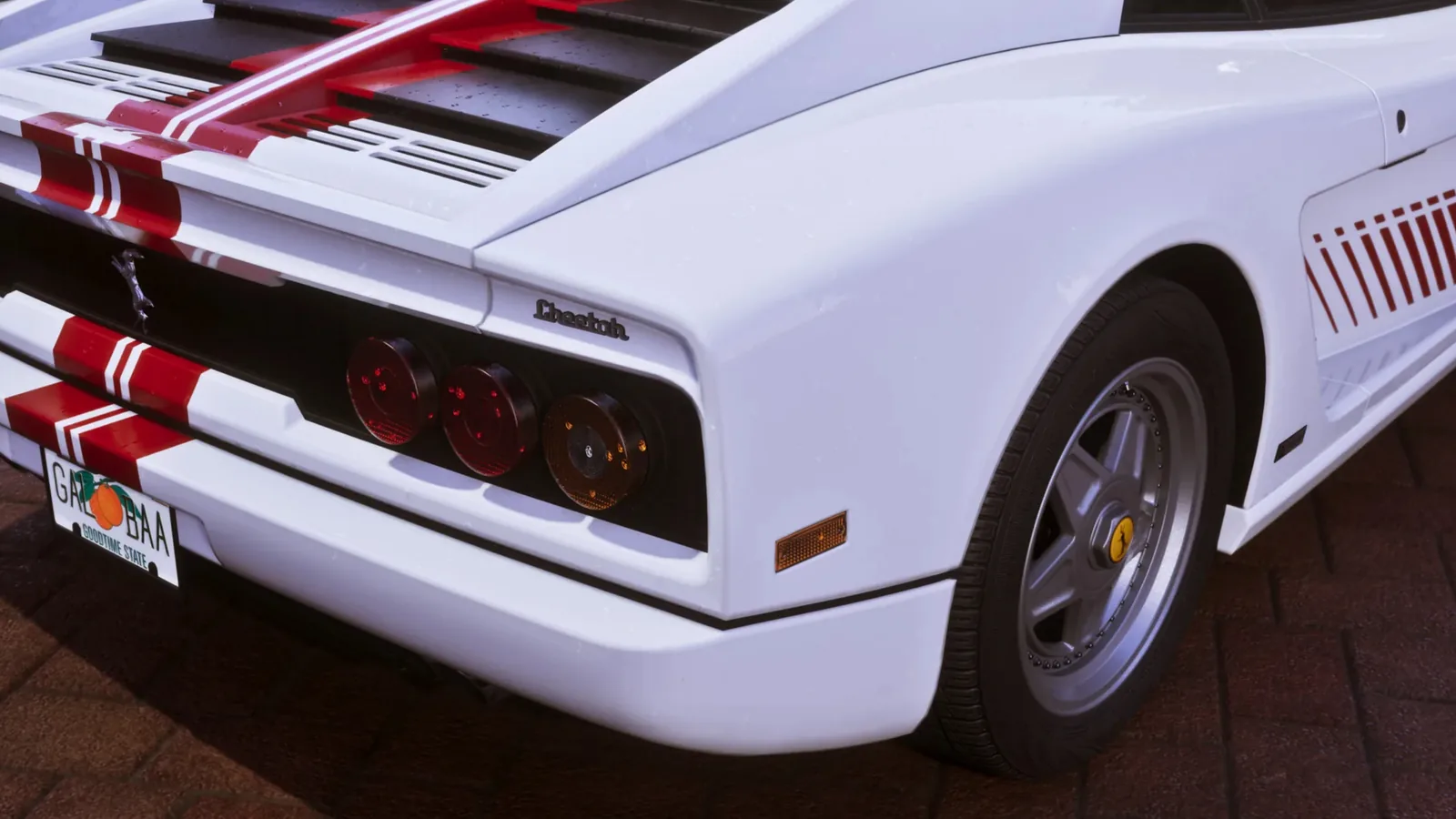
Many GTA 5 cars used a dark line in the texture to represent the narrow space between two panels. In the newer GTA 6 model, the door and surrounding panels appear to be separated by modeled geometry, producing a natural shadow instead of relying entirely on a painted line.
This does not mean every visible panel will deform, detach or open. It does show that Rockstar is building the exterior with close-up cutscenes, garages and customization screens in mind.
What Sits Underneath Is Getting Modeled Too
The difference becomes more obvious on raised cars. A modified donk shown in the GTA 6 screenshots appears to expose a wishbone arrangement, control arms and other suspension components. Its height makes the underbody easy to see, so a flat underside would stand out immediately.
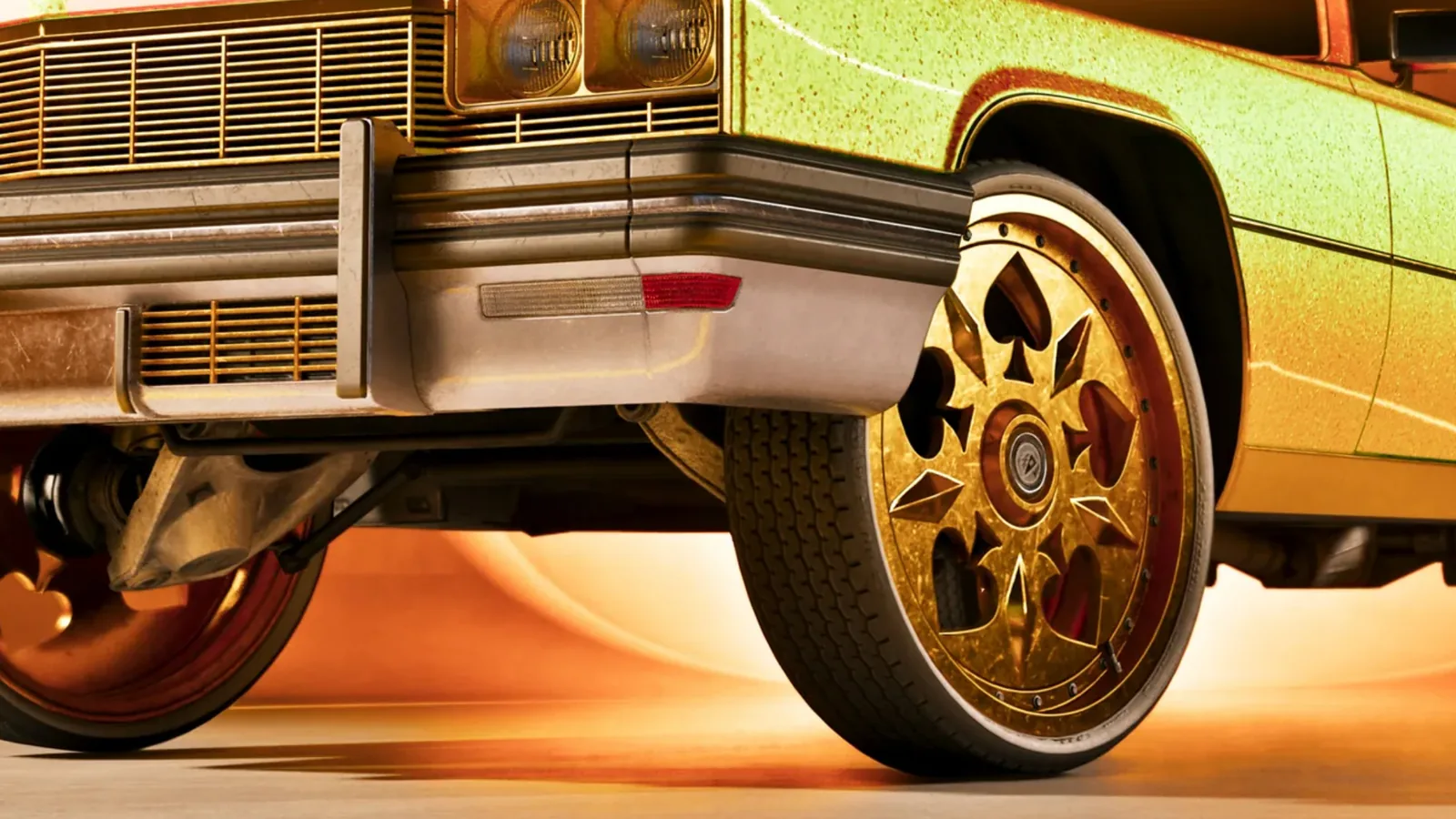
GTA 5 occasionally added extra geometry beneath taller vehicles, but large sections of many underbodies remained flat. GTA 6 appears to be giving prominent vehicles underbodies suited to their type, age and suspension setup, preventing lifted cars from looking unfinished during jumps, crashes and customization.
How Many Polygons Could a GTA 6 Car Use?
Polygon counts change between model variants. A high-detail car used in a close-up is not necessarily the same version rendered several streets away in traffic. Developers use levels of detail, usually called LODs, to reduce geometric complexity as an object moves farther from the camera.
The available estimates show how Rockstar’s vehicle budget may have developed. None of the ranges below has been confirmed by Rockstar.
// The vehicle polygon ledger
Ranges come from visual analysis by an experienced GTA vehicle artist. Rockstar has published none of them.
| Vehicle model | Polygon range | Status |
|---|---|---|
| GTA 5 launch gameplay car | 10,000 to 20,000 | Artist estimate |
| GTA 5 launch high-detail car | 40,000 to 70,000 | Artist estimate |
| Newer GTA Online vehicle | 90,000 to 140,000 | Artist estimate |
| GTA 6 high-detail vehicle | 200,000 to 300,000 | Unconfirmed |
These figures should not be read as a direct quality ranking. Counting methods differ, interior geometry may be included or excluded, and a game can reserve its heaviest model for a showroom or photo mode. Materials, reflections, lighting, surface shading and the quality of the original modeling all influence the final image.
Why the Racing Game Comparison Still Holds
A dedicated racing game can concentrate much of its rendering budget on a controlled number of cars and a track. GTA 6 has a different problem. It must display traffic, crowds, buildings, shop interiors, vegetation, street furniture, water and numerous interactive objects while the player moves freely through Leonida.
That makes the apparent vehicle quality notable even if a showroom model in Gran Turismo or Forza contains more raw geometry. GTA 6 cars do not need to win a polygon-count contest to approach the visual quality of racing games during normal play. They need accurate shapes, convincing materials and enough detail to survive both close inspection and a busy street scene, in a game already accused of looking too good to run.
What This Detail Could Mean During Gameplay
More carefully constructed cars could improve several parts of GTA 6 without changing the basic driving controls. Body panels should hold up better in close camera angles, wheel wells may look deeper during jumps, and custom parts should connect more naturally to the original vehicle.
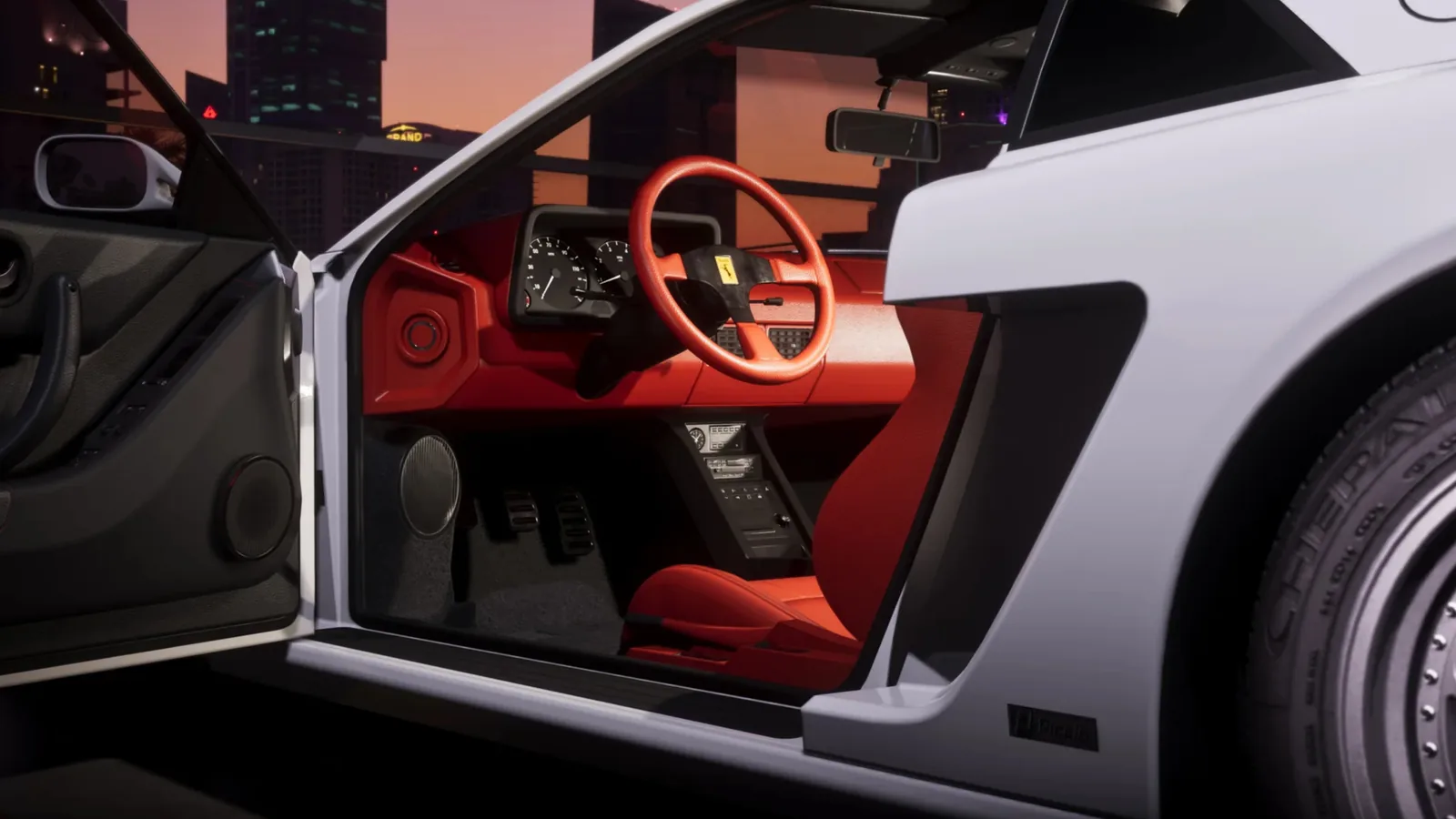
Damage could look more convincing if bumpers, doors and lights are distinct components. The screenshots do not confirm a new deformation system, and visual separation alone does not prove that every part will react independently in a collision.
For now, the strongest conclusion is that Rockstar is no longer building GTA 6 vehicles around the viewing conditions of a 2013 console game. The cars appear designed for modern displays, detailed customization and a world where players will spend hundreds of hours examining the same machines from every angle.
Discussion
Comments · Car Models Rival Racing Games
No comments yet.
Loading comments…