


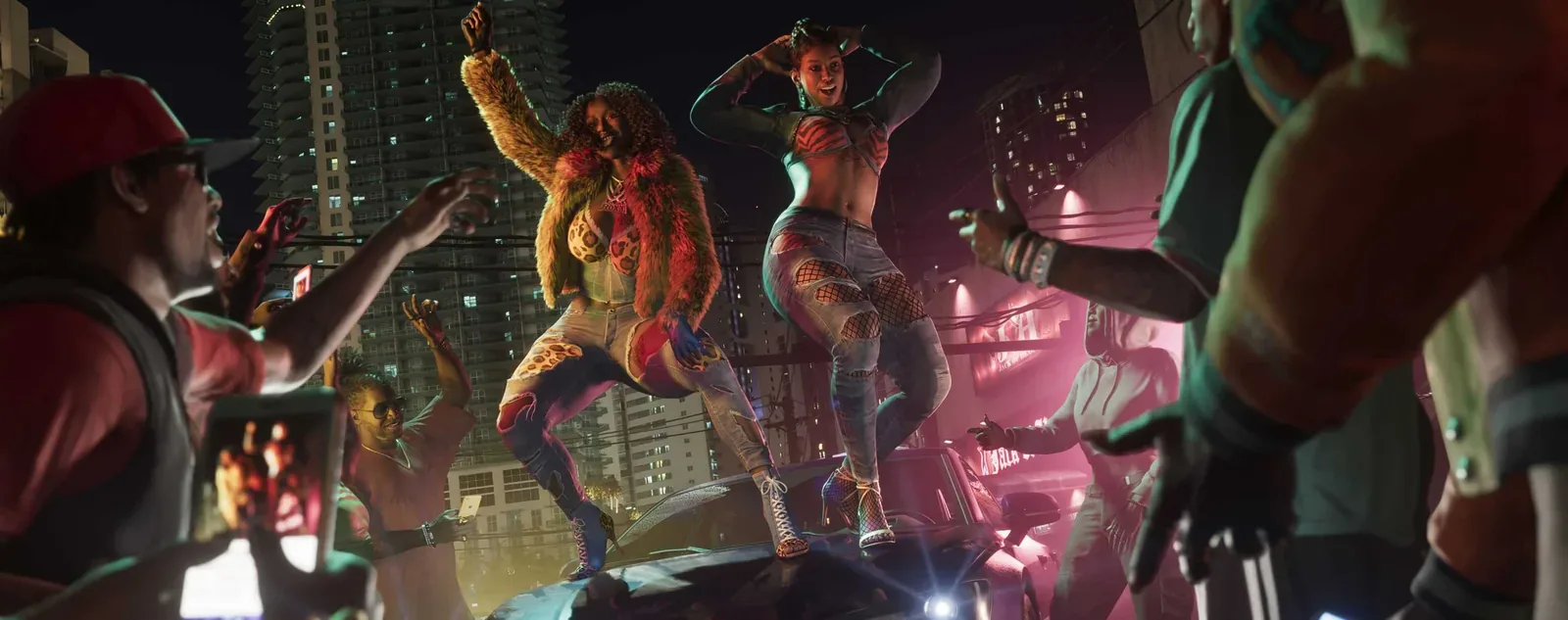
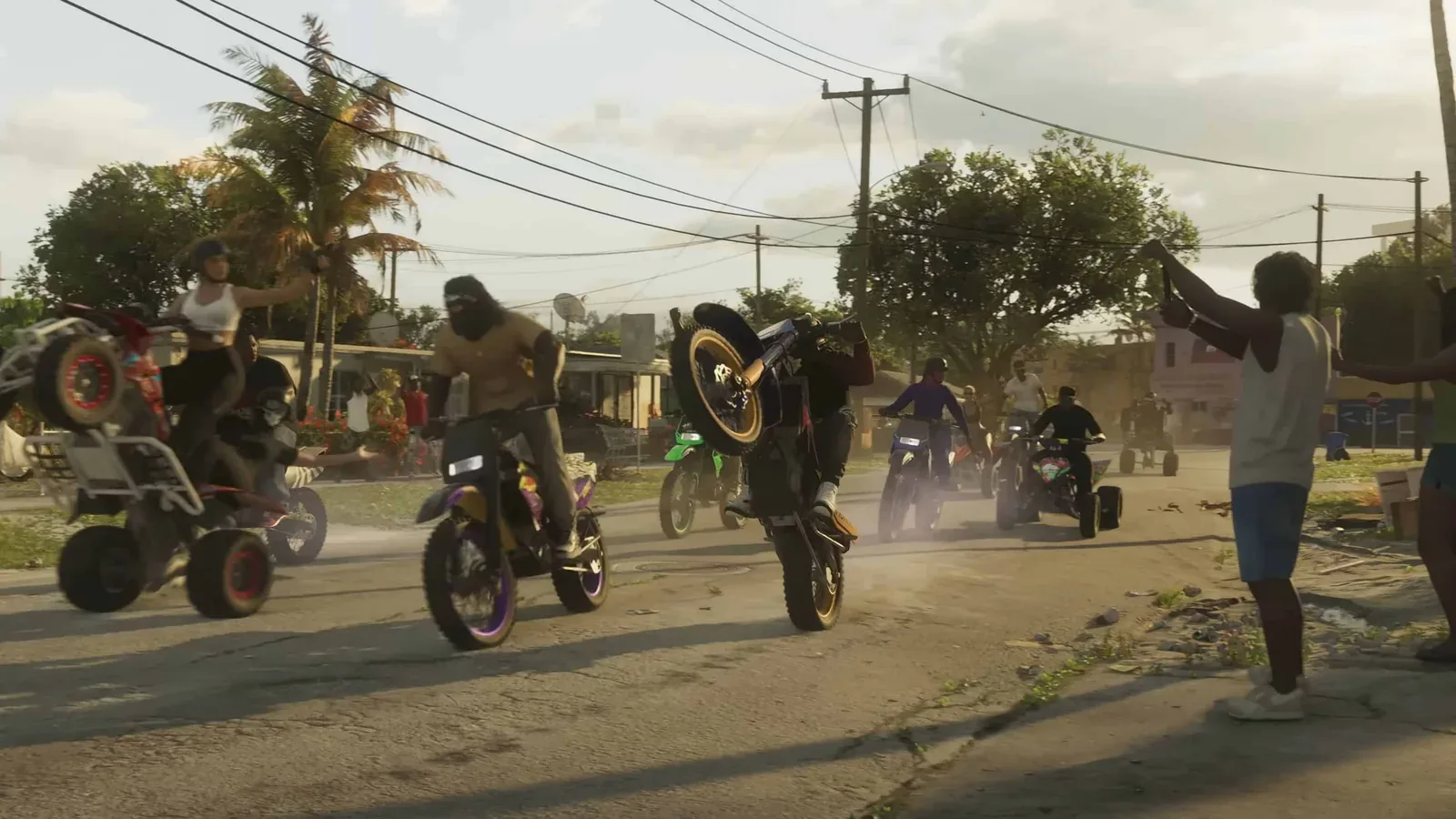
For decades open-world NPCs were hand-built assets with reused animations. GTA 6 assembles its people dynamically from modular systems, adapting body, movement and behaviour to context, which is why Leonida reads as lived-in rather than crowded.
- Old GTA games leaned on static NPCs with reused animations
- GTA 6 builds characters dynamically from modular systems
- NPCs adapt body, movement and behavior to context
- The result is a city that feels alive instead of populated
The Living City That Never Quite Lived
Open-world games have always sold the same fantasy: a living city where life continues whether you are watching or not. Maps grew bigger, visuals sharper and crowds denser, yet one thing never really changed. The people inside those worlds still felt artificial.
That was not a failure of budget or imagination. It was a structural limit baked into how NPCs have been built for decades, and no studio has pushed against it harder than Rockstar.
The Production Model That Never Scaled
Traditional pipelines treat NPCs as finished assets. Each one is authored by hand, animated against a fixed body and handed a small set of behaviors. To fill a city, those characters get reused with surface-level tweaks. The symptoms are the same everywhere:
- Repeated body types showing up across unrelated districts
- Shared walk cycles and idle animations reused at scale
- Behavior that feels disconnected from place or context
- Differences that fade the longer you actually look
None of it is obvious at first. It accumulates. Once you start recognizing the patterns, the illusion thins out.
How GTA 6 Changes the Math
The new approach treats NPCs as something assembled rather than finished. Modular systems build characters dynamically, adapting body, movement and behavior to location and context. That lets variety scale without a proportional mountain of manual work, which is the whole reason Leonida can feel populated and specific at the same time.
It is the visible half of a deeper shift, the same one hinted at in Take-Two’s recent patents. This is not an upgrade to the old model. It is a clean break from it.
The break now has official numbers. Press material around the Extended Look reports over 600,000 NPC reaction animations against roughly 55,000 in GTA 5, and preview coverage puts the pool of NPC voice lines at around 600,000 as well. Both figures point at the same production reality: Rockstar runs a dedicated studio in Los Angeles that works on nothing but NPCs, their behaviour, their outfits and what they wear, with no story or cutscene work at all. Previews also describe far greater variety in body shape and height than any previous Rockstar game, with animations dynamically retargeted to each NPC’s size so large and small characters no longer share the same canned movement. The full system, from eavesdropping to livestreaming NPCs, is mapped in our NPC AI and living world guide.
The Patent Parameters Made Real
The paper trail predicted this. Take-Two’s patent filing for a system and method for virtual navigation describes what is effectively a personality system for NPCs, where every character gets individual parameters such as an aggression level, patience and their own reaction to the weather. The same filing points at hundreds of thousands of ambient dialogue lines for pedestrians that only trigger when specific combinations of conditions line up, like the time of day, the weather or the crime you are committing.
What looked like legal boilerplate in 2025 now reads as a spec sheet. Individual personality parameters explain how a 600,000 animation library gets used without repetition, and conditional dialogue explains why a voice line pool of similar size is necessary at all. A crowd where everyone shares one temperament can reuse lines freely. A crowd where each NPC has their own patience threshold and weather mood cannot, which is exactly the kind of scaling problem you hand to a studio that does nothing else.
Discussion
Comments · NPC Scaling Explained
No comments yet.
Loading comments…