
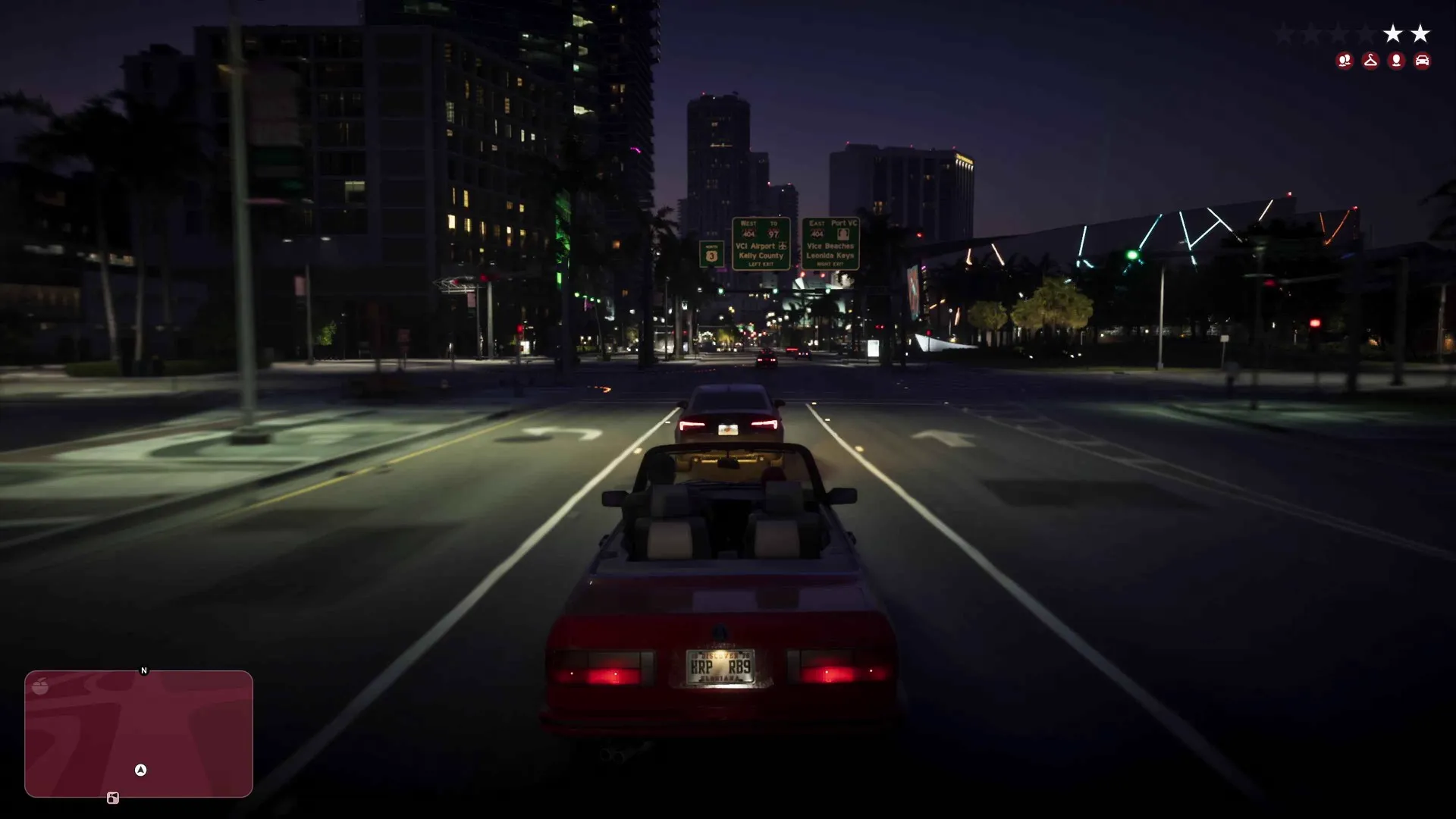
GTA 6 tiers car theft by value. Cheap cars hotwire, expensive ones need a key cloner, and trackers ping police if you slow down. Fences buy what you steal, strip trackers and unlock better tools as you work for them.
- Abandoned stolen cars show a grey map icon and vanish on reload, gas stations repair damage before a fence sale, and GTABase counts 294 identified vehicles against three early personal vehicle slots.
- Cars are stratified by value: older models hotwire, modern prestige vehicles cannot start without a key cloner, per Rob Nelson.
- The Waink phone app scans any parked car for its worth, security, tracker tier, registration cost and sale price before you commit.
- High-tier trackers run a speed minigame: drive fast and they stay silent, slow down and they ping your location to the police.
- Fences buy stolen cars at prices cut by damage, hand out want lists and impound codes, and strip trackers once you earn it.
- Registration turns a stolen car into a personal vehicle for a fee, but only after the tracker is off, and garages hold the rest.
Why Stealing Cars Got Harder
For twenty years, every car in a GTA game was the same lock with a different body. GTA 6 ends that. Rob Nelson, on the record at the Rockstar North press sessions: “We’ve added some stratification to the vehicles.” IGN’s preview spells out what that means in practice. Cars are now categorised by tier, more expensive models are a much tougher challenge to get into, and some cars are simply inaccessible early because the tools you need are not acquired until later in the story.

The banter from IGN’s session makes the ceiling concrete: there is no booting up the game and stealing a parked supercar on day one. You cannot break into it. You can still hijack it while someone drives it, a clearly deliberate loophole, but the parked version of that car belongs to a future you with better equipment.
One hands-on account draws the design conclusion: theft now takes longer, so you have to be smarter about when and where you steal, especially with police already behind you. Car theft in GTA 6 is a decision, not a reflex. The rest of this guide covers the tools that decision buys, the trackers that punish it and the fences that pay for it.
Scan First With the Waink App
Casing a car now happens through a phone. Rob Nelson: “You can scan vehicles with an app on your phone to see what sort of security they have and what they are worth for you to sell.” The app is called Waink, spelled W-AI-NK per one creator who saw the icon, and pronounced exactly the way Rockstar wanted. Point the camera at any parked car and it returns a dossier: whether it is locked or alarmed, tracker tier if any, registration cost, the tool needed to get in quietly, and, per the full IGN transcript, two separate prices, what the car is worth at a paint shop and what a stolen-vehicle buyer pays.
The one hard limit: the scan only works while nobody is driving the car. Moving targets stay mysteries. Waink shares the home screen with a wider suite, BuckMe for banking and RydeMe for taxis among them, and the phone apps guide covers that whole ecosystem. Here it matters for one reason. Every number the fence will ever pay you is visible before you touch the door.
Smash, Slim Jim or Key Cloner
At a parked car, the Extended Look shows Jason with two prompts: smash the window or use a slim jim. Smashing is instant and loud, sets off the alarm, and the on-screen prompt itself calls it the sloppier steal. The slim jim is the quiet route and runs its own quick minigame to push the tool in and jimmy the lock. It also only works on older, less secure cars. For modern prestige vehicles the required item is a key cloner, which does two jobs at once: per Rob Nelson, “if you have a key cloner, you can also use it to get in and start the vehicle without setting off the alarm.”
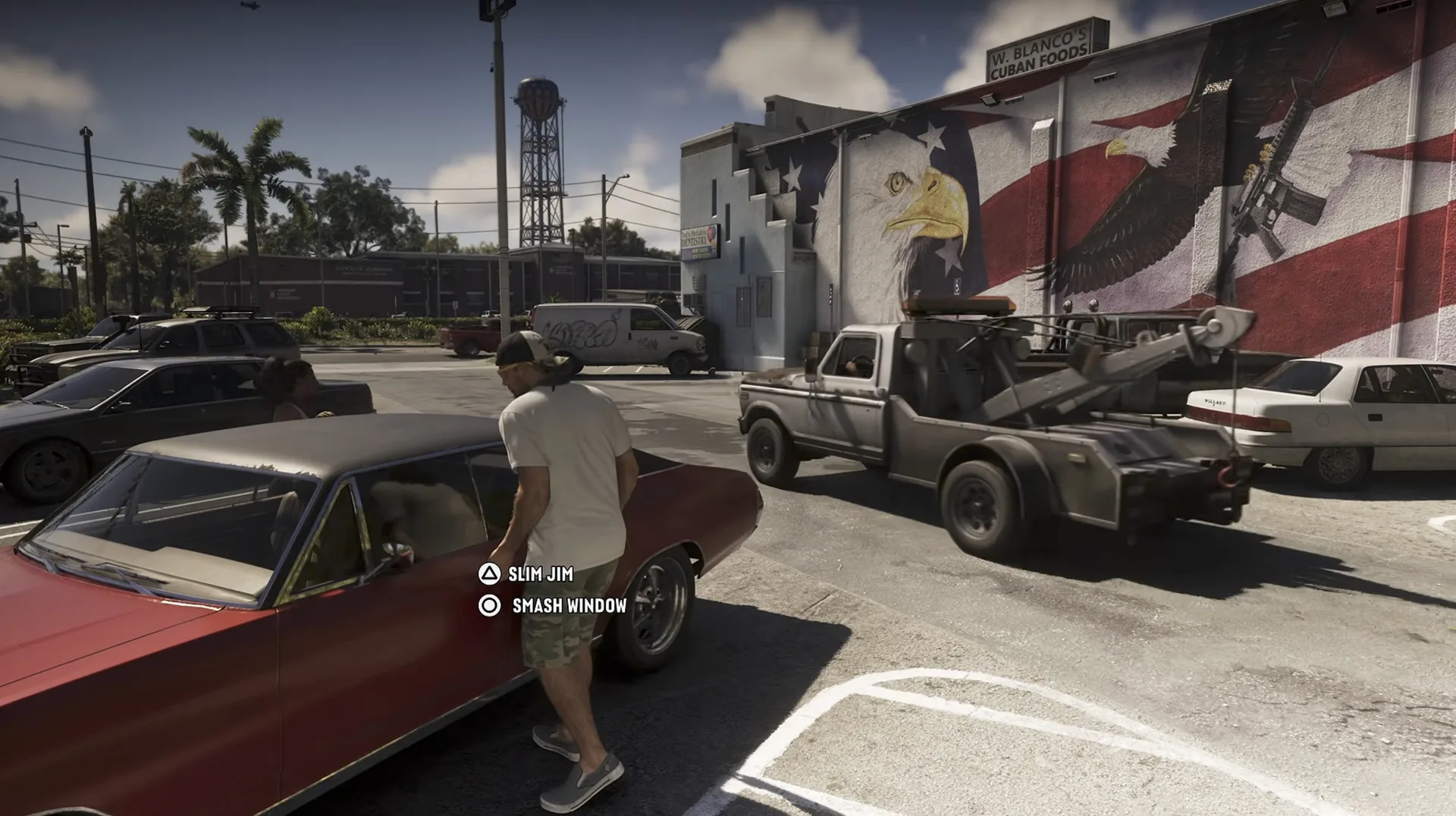
These are not context prompts, they are owned equipment, and the game rations them. Nelson again, describing his own demo save: “Throughout the world, as we do things for them, we unlock things like... the slim jim has been unlocked by the point I am here in flow.” Work for fences, get better burglary gear. The loud option is always available. The professional options are earned. The full IGN transcript shows the rationing in live play: one car in the demo required the key cloner while another opened with nothing more than the manual lockpicking tool, two locks on the same street asking for two different tools.
One breakdown adds a further item, claiming high-end cars “will not start without an immobiliser bypass.” Another creator hedges the same item with “I think that’s still in the game.” No press account names it, so I am filing the bypass as plausible leak-era carryover, not confirmed kit.
Hotwiring Rules and the Carjack Fallback
Starting the car has its own stratification. Rob Nelson’s full ruling: “You don’t need anything to hotwire, but not all vehicles can be hotwired. Some vehicles need a key cloner to start. You can smash the window and get in, but you can’t start it without the key cloner.” That last clause is the trap: a smashed window buys a seat in a car that will never move, plus a live alarm.
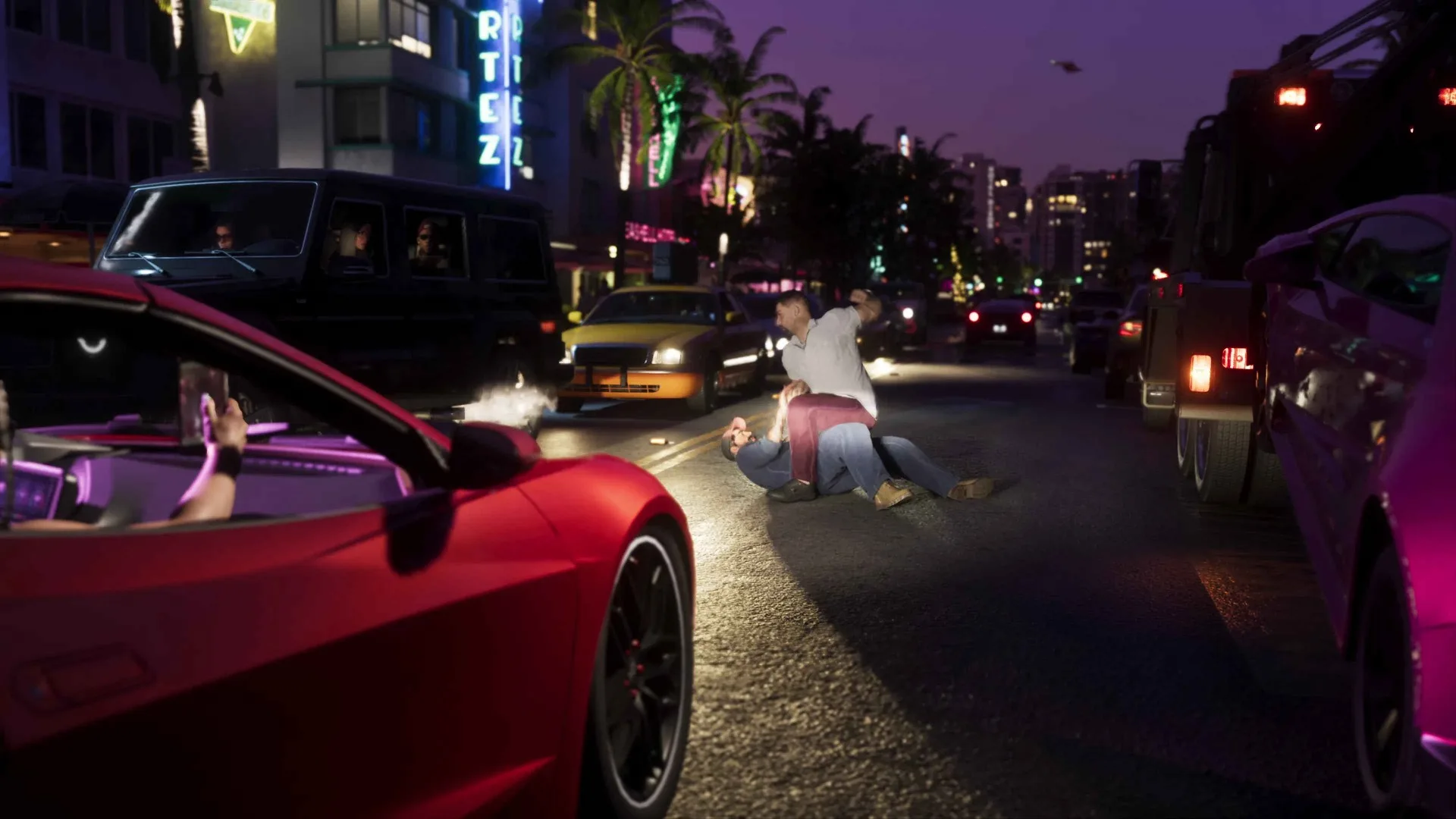
The fallback is the oldest move in the series, upgraded. Any car with someone in the driver’s seat can still be taken, and IGN describes carjacking as working just how you remember it. The hands-on accounts add texture: pulling a driver out is now a quick tap-the-button struggle rather than a free animation, and passengers no longer sit politely through it, they fight back and drag you out of the seat. Nelson learned this on camera, in his own game: “there was a passenger in there and she just threw me out.”
The Famitsu interview adds a third route between hotwiring and the physical pull: threaten the driver and they may hand the car over without a struggle. It comes with a warning that the residents of Leonida are not all submissive, some drivers are armed and answer a pointed gun with one of their own, so the polite-looking option can turn into a firefight faster than a smashed window ever did.
Put the two systems together and the early game writes itself. A parked high-end car is a locked safe you cannot crack yet. The same car at a red light, engine running, is an invitation. Until the key cloner arrives, the only supercars you will drive are the ones you take from moving traffic.
Trackers, Tiers and the Speed Minigame
Getting in was the easy half. Most valuable cars carry a tracker, and trackers come in tiers: a standard model, at least one confirmed higher tier, and possibly a third that no account has pinned down. A tracked theft is one of the confirmed ways a crime gets reported, and Famitsu’s Rob Nelson interview adds the human channel: owners report stolen cars, and the police then investigate using whatever they hold on your clothing, appearance and vehicle. Either way, the moment you roll off in tracked metal, the report is already travelling. What the police do with it is the wanted system guide’s territory.
The higher tier brings the best new mechanic on this page. Rob Nelson describes a speed minigame: drive fast enough and the tracker stays silent, slow down and it starts beeping, stay slow too long and it pings your location to the police. IGN’s preview corroborates it exactly, advanced trackers alert police if you drive too slowly, so pick up the speed or abandon the car, and the full transcript adds the interface tell: an advanced tracker announces itself as a flashing red light at the bottom of the screen, and once the speed stays low too long it sends a signal that tells police exactly where the car is. A stolen car that punishes red lights. That is a genuinely new pressure in this series.
Police vehicles carry trackers of their own, though the accounts disagree on coverage: one says every cop car is tracked, another says most, with older cruisers exempt. Either way, a stolen police car is close to impossible to go quiet in.
Fences, Want Lists and Pay Sprays
Stolen cars become money at a fence, and fences are specialists: one buys drugs, one jewellery, one cars, with more types implied. The car fence in Nelson’s demo has a name and a shopping habit: “this vehicle is wanted by Randy, who’s a car fence. He has a big list of cars he wants.” Want lists give free-roam theft a direction, and IGN adds a sharper perk: the code for a police impound full of vehicles ready to be boosted. The full transcript plays that sequence out: a stolen-car buyer hands over the impound code, Nelson walks the rows and sizes one up with a that looks like an Infernus to me, then repairs it before the sale because the buyer pays less for damaged metal. A damaged delivery is worth less, the price dynamic against the car’s condition, and the wider fence economics live in the money and economy guide. Fences also buy robbery loot, and that ladder of targets belongs to the robbery system guide.
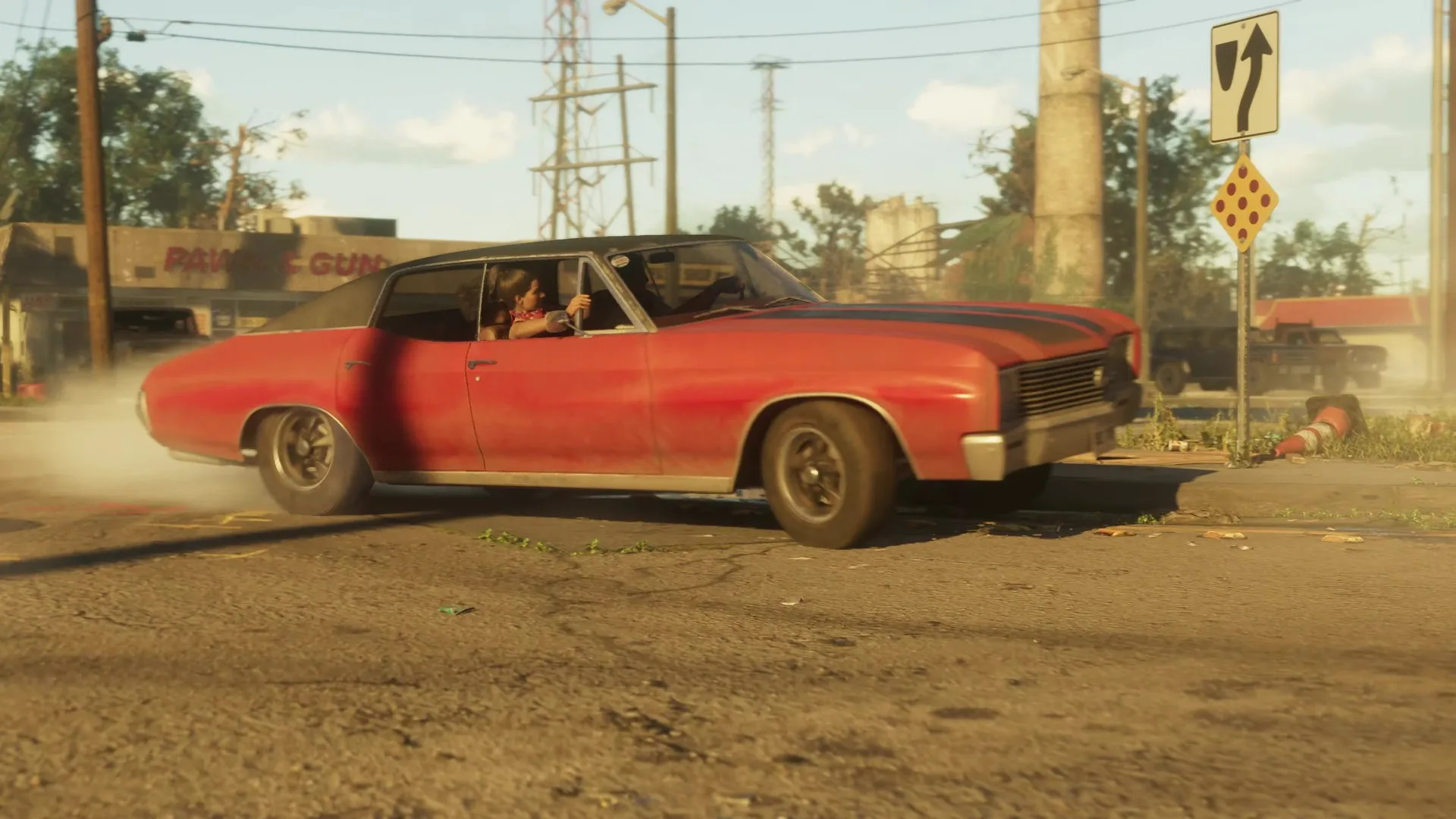
The relationship compounds. Nelson: “as you do things for them, they’ll be able to do more things for you. You’ll be able to sell higher-end cars to them, and they’ll be able to take higher-end trackers off.” Pay and sprays are back for the first time since GTA 4, they repair, respray and will also buy cars, and neither they nor fences are necessarily available at the start, arriving, in Nelson’s words, over time because of the way the narrative unfolds.
The Famitsu interview adds a seller’s rule to that loop: sell a car at a pay and spray and the shop stops buying for a while, so a second stolen car means driving to a different one. Moving vehicles in volume is a route around the map, not a queue at one counter.
Registering, Garages and Keeping Stolen Cars
Not every car should meet a fence. GTA 6 lets you keep what you steal by registering it as a personal vehicle for a fee, the same fee Waink quotes during the scan. Two gates apply. High-end vehicles cannot be registered early, and nothing with a live tracker can be registered at all. Nelson hit that wall in his own demo: he wanted to keep a car but had not done enough fence work to strip its tracker, so he could not register it. The man who helped build the system got told no by it.
Garages are the workaround and the storage economy. A storage garage costs a few thousand dollars, and you can hold as many personal vehicles as you have spaces. Nelson’s example is the whole pitch in one line: buy a cheap garage, steal a $50,000 car and stash it there, and it stays safe “even though it’s not yours until you have the means to register it.” Where those garages sit alongside the safehouses you cannot buy is covered in the safehouses and garages guide.
Registered cars are hard to lose permanently. Destroy one and the Scooter Brothers recovery service returns it for modest money. Abandon one mid-chase and police guard it, then impound it, so you either sneak it back from under them or pay the impound later.
The Theft Loop From Scan to Payday
Assembled, vehicle theft becomes the game’s clearest progression loop, and one breakdown calls it exactly that, a real progression cycle:
- Scan the target with Waink: value, security, tracker tier, tool required, sale price.
- Get in with the right tool, slim jim for old metal, key cloner for prestige, or smash the glass and accept the alarm.
- Start it: hotwire what allows it, clone what does not.
- Manage the tracker: keep the speed up, or drive straight to a fence that can strip it.
- Deliver clean and choose the exit: sell to the fence, or pay the registration and keep it.
- Reinvest the money in tools, garages and fence trust, then go after a bigger tier.
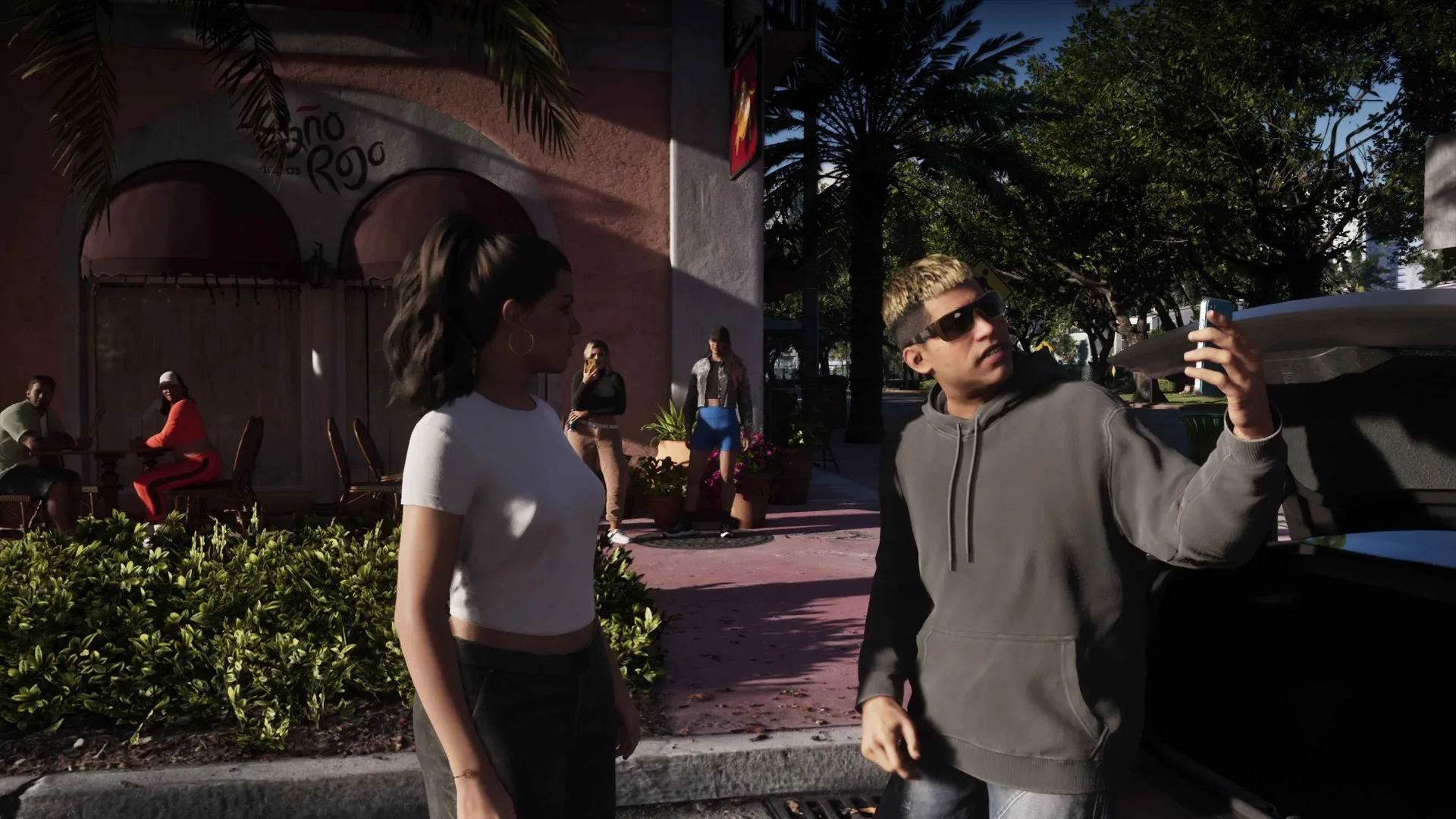
The arc across a playthrough follows the same logic. Early on you live off older cars because they open easily, hotwire freely and leave no digital trail. Later, with a cloner in your pocket and a fence who owes you, the luxury tier opens up. The world even mocks you along the way: one shown random encounter has an NPC livestreaming your entire car theft from the boot.
What would change my mind on the open items: a second source for tracker removal at body shops, currently one account against everyone saying fence only, a press sighting of the immobiliser bypass, and confirmation of that third tracker tier. Until then, the loop above is the system, and it is already the deepest car theft this series has shipped.
Grey Icons, Gas Station Repairs and 294 Spotted Vehicles
The Famitsu material relayed through creator breakdowns adds a rule about the cars you abandon: stolen vehicles show up on the map with a grey icon and vanish when the game reloads. A stolen car is a loaner until it is registered or garaged, and anything you want to keep needs to be made yours before you put the controller down.
Condition management got more specific too. A damaged vehicle can be repaired at a gas station before it meets the fence, or sold as-is for less, so the repair bill is a margin calculation rather than cosmetics. A respray at a pay and spray also works as a police countermeasure, clearing the vehicle description the same way a change of clothes clears yours. And one warning from Davy Jones’s hands-on: flip a car onto its roof and there is no rocking it back this time.
The scale of the keep-or-sell question has numbers now. GTABase’s September update counts 294 identified vehicles, against three personal vehicle slots early on and purchasable garages later, and creators add that two mod shops, One-Eyed Willie’s and Ride Out Customs, are locked to the Ultimate Edition. The maths of what to keep, what to fence and what to respray only gets harder from here.
Discussion
Comments · Vehicle Theft and Fences
No comments yet.
Loading comments…