


Every Rockstar game since a 2006 table tennis title has run on RAGE, the engine Rockstar San Diego built after EA bought RenderWare. This guide traces it from GTA IV through GTA V and RDR2 to the ray-traced lighting Digital Foundry found in GTA 6.
- RAGE was born when EA bought Criterion in 2004; Rockstar built its own engine at the former Angel Studios and shipped it first in Table Tennis on May 23, 2006.
- GTA V used a deferred renderer with a five-target G-buffer; RDR2 moved to physically based materials; GTA V Enhanced trialled ray tracing in 2025.
- Physics comes from Bullet and character balance from NaturalMotion’s Euphoria, first shipped in GTA IV; GTA 6 shows the same reactive behaviour.
- In GTA 6, Digital Foundry finds ray tracing central to lighting and reflections while sun shadows stay on refined shadow maps.
What RAGE Is and Why Rockstar Built It
RAGE stands for Rockstar Advanced Game Engine, the in-house technology every major Rockstar game has run on since 2006. It is built and maintained by the RAGE Technology Group inside Rockstar San Diego, the studio that used to be Angel Studios, and it grew out of that studio’s own Angel Game Engine. Unlike Unreal or Unity it is not licensed to anyone else, which is why you will never see a RAGE logo on a non-Rockstar game and why the company rarely talks about it by name.
The reason it exists is a corporate accident. Through the PlayStation 2 era Rockstar built GTA III, Vice City and San Andreas on RenderWare, a licensed engine made by Criterion Games. In 2004 Electronic Arts bought Criterion, which put the technology under Rockstar’s biggest open-world rival, and Take-Two already owned a studio with its own engine: Angel Studios, bought in 2002 and renamed Rockstar San Diego. Rockstar spun up the RAGE Technology Group there, started from the Angel engine, and set about building something that could stream a city on the hardware that was coming next. Our development history covers the studio side of that decade; this guide is about the technology.
A Ping-Pong Game as the Test Bed
The first RAGE game was not a GTA. It was Rockstar Games Presents Table Tennis, released for Xbox 360 on May 23, 2006 and ported to Wii the following year. At the time it looked like a strange detour for the studio behind San Andreas; in hindsight it was the smartest possible way to learn a new console generation and a new engine without a thousand-person production riding on it. A table tennis match is two realistic human characters, one room, fast animation and nothing else, which is exactly the list of things a new engine needs to prove first. Polygon’s Oli Welsh, looking back on the game’s twentieth anniversary, described it as a focused test bed for rendering realistic human characters.
Two years later the same engine shipped Grand Theft Auto IV, and the lineage has been unbroken since: Red Dead Redemption, Max Payne 3, GTA V across two console generations and PC, Red Dead Redemption 2, the GTA V Enhanced release for current consoles and PC, and now GTA 6.
One Engine, Four Console Generations
RAGE is less one engine than a long series of them under one name. Each game gets its own branch, assets and tools carry forward, and the renderer has been rebuilt at least twice. GTA IV and the first Red Dead were built for the PlayStation 3 and Xbox 360 generation. GTA V moved to a deferred rendering pipeline, documented in detail by graphics engineer Adrian Courrèges in his 2015 frame study of the PC version: a real-time environment cubemap rendered every frame for reflections, then a G-buffer pass writing five render targets at once (diffuse colour, normals, specular, irradiance and depth with stencil), with lighting calculated afterwards across the whole screen rather than per object. That is what let GTA V light a city with thousands of small lights on 2013 hardware.
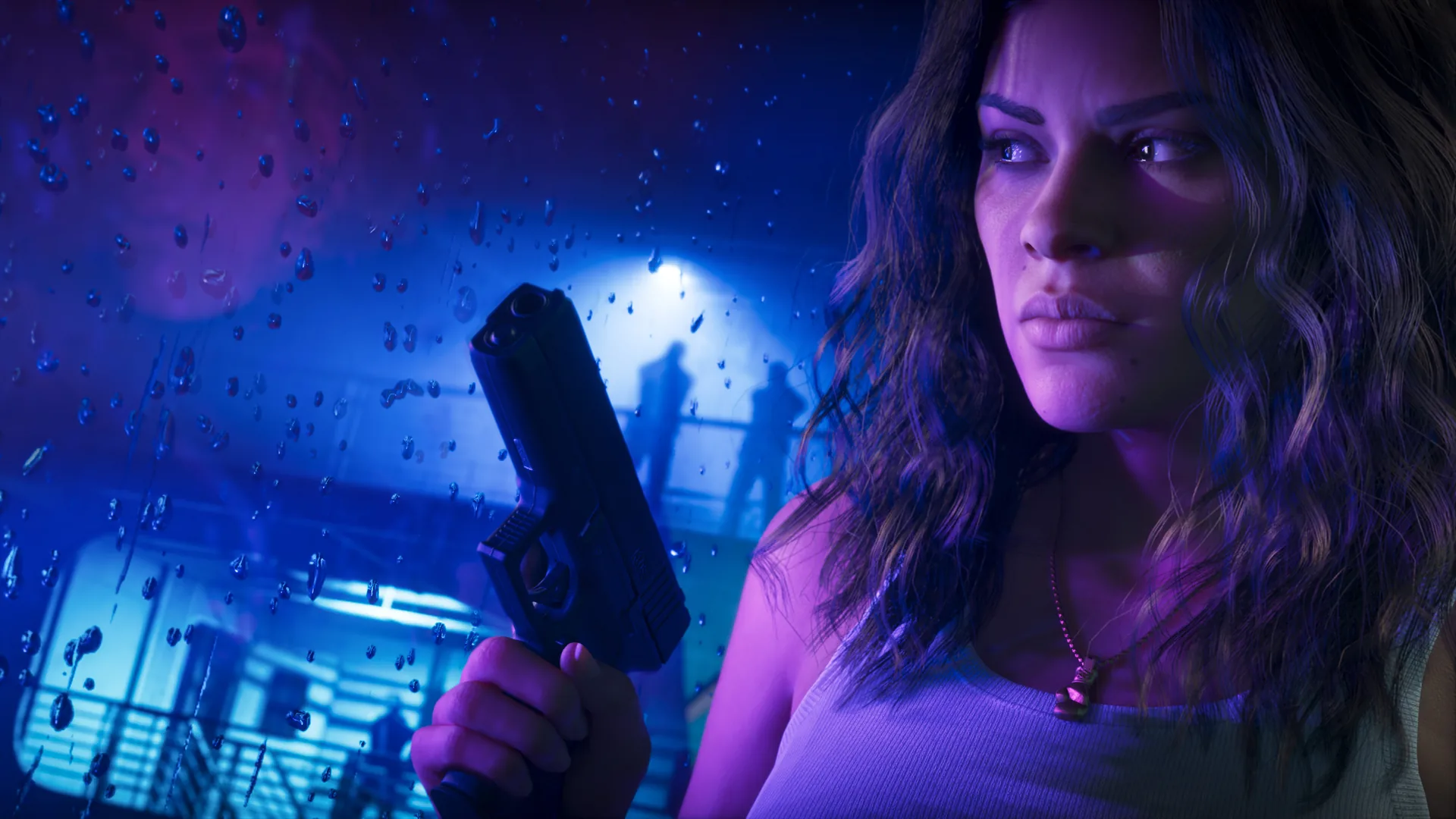
Red Dead Redemption 2 rebuilt the look again around physically based materials, volumetric lighting and a world that could be dense with foliage without stalling. The GTA V Enhanced release in 2025 then added ray-traced global illumination, reflections and ambient occlusion to a twelve-year-old game, which gave Rockstar a shipped, public test of the lighting approach a year before GTA 6, much as a ping-pong game had been the test in 2006.
Bullet, Euphoria and Why Characters Stumble
Two pieces of outside technology sit inside RAGE. Collisions and rigid-body physics use Bullet, the open-source physics library, which is why cars crumple and shopping trolleys roll the way they do. Character balance uses Euphoria, a runtime system from the Oxford spin-out NaturalMotion that simulates a body trying to stay upright rather than playing a canned fall. GTA IV in 2008 was the first commercial game to ship with it, and Rockstar licensed it for Red Dead Redemption, Max Payne 3, GTA V and RDR2. Zynga bought NaturalMotion in 2014 for $527 million, mainly for its mobile games, and the Euphoria business carried on underneath.
Euphoria is the reason a pedestrian clipped by a wing mirror staggers, windmills and catches himself instead of ragdolling, and why no two falls look identical. Rockstar has not said whether GTA 6 still uses it or has replaced it with something in-house, but every trailer shows the same behaviour: bodies that react to being pushed, shot or knocked down in the moment rather than falling the same way twice. Whatever the system is called, that lineage is intact.
What Changes for GTA 6
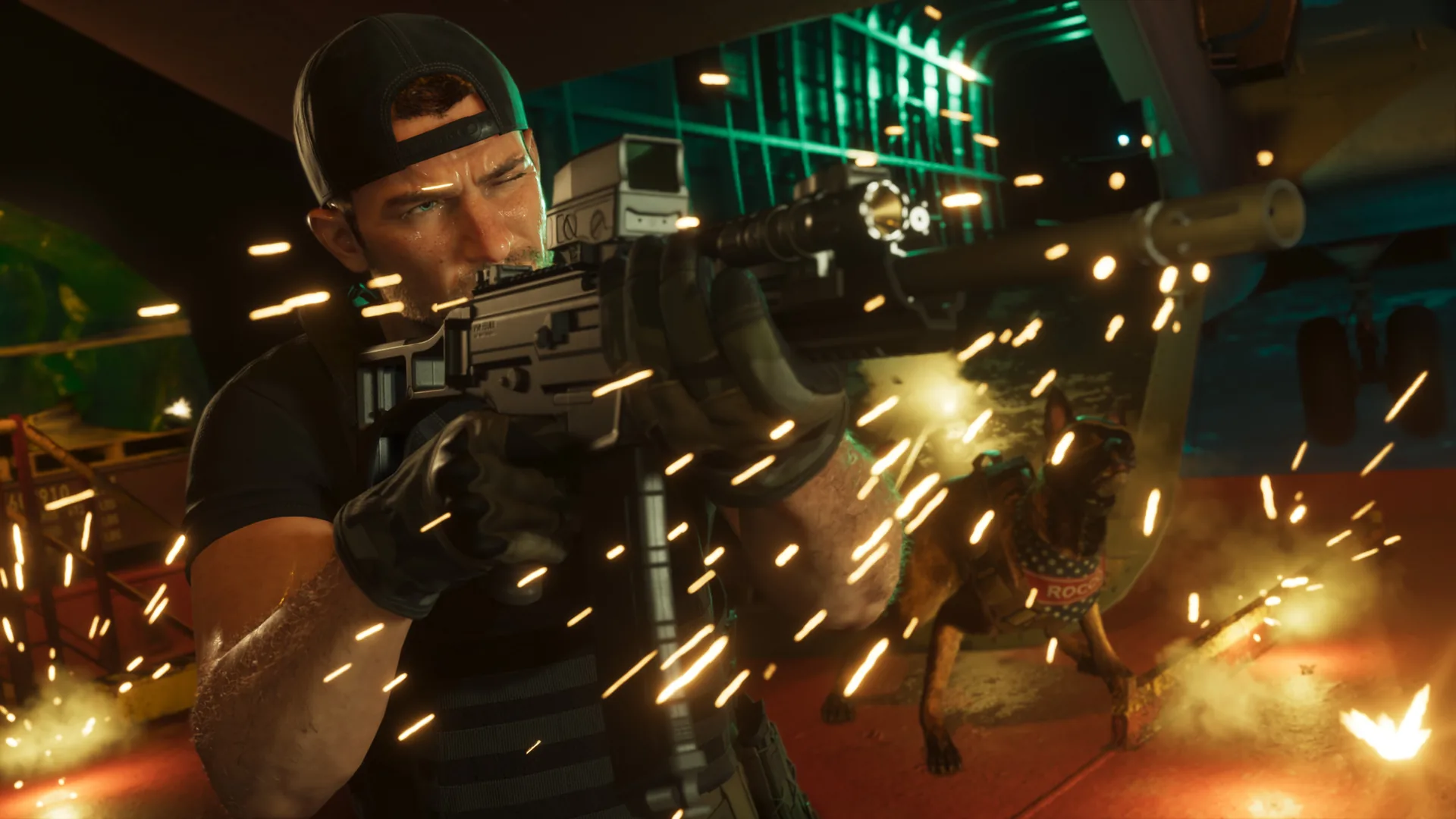
Rockstar does not describe its renderer in marketing, so the best public account of what RAGE is doing in GTA 6 is Digital Foundry’s frame-by-frame analysis of the Extended Look. Its headline finding is that ray tracing is now “clearly central to the game’s lighting and reflections”. Diffuse global illumination is heavily ray-traced, with indirect light bouncing through interiors and exteriors, colour bleeding off surfaces and even light transmitting through bodies and transparent objects, effects Digital Foundry judged extremely hard to fake with pre-baked lighting in a world this dense and dynamic. Reflections are ray-traced too, which is why characters appear in windows and wet surfaces that screen-space tricks would leave empty, though they resolve at low internal resolution and blur and ghost under camera motion.
Not everything went to ray tracing. Sun shadows and most local shadows still come from refined shadow maps with variable penumbrae, softer the further they fall from the caster, and Digital Foundry’s reading is that Rockstar has invested in maturing its shadow maps rather than leaning on hardware ray tracing for everything. Household mirrors still appear to use old-fashioned planar reflections, as in earlier Rockstar games, because where the older technique looks better or costs less it stays in the toolbox. Hair gets a full simulation with base-to-tip motion and proper light transport across straight, wavy and curly styles, and skin shows sweat and make-up that behave like sweat and make-up. The same analysts also tracked a long-standing RAGE quirk, uneven animation pacing in camera pans that has been visible since GTA IV, and found it absent from the launch trailer. We wrote that one up in our Digital Foundry article.

The world side has its own story that Rockstar has told in fragments: Aaron Garbut’s description to Edge of weather built from wind, humidity, fog and season interacting, surfaces that dry at different rates, an order of magnitude more interiors than before and around 600,000 hand-directed animations. All of that is streaming and simulation work rather than rendering, and it is the part of RAGE no outside analysis can measure until the game is in players’ hands.
Why Rockstar Does Not Just Use Unreal
The question comes up every time a studio drops its own engine for Unreal, so it is worth answering plainly. Rockstar’s whole production is built around RAGE: its animation pipeline, its streaming system for enormous maps with no loading screens, its tools for populating cities, and twenty years of assets and code that move from game to game. Switching would mean rebuilding all of that and paying Epic a royalty on every copy of the best-selling entertainment product of the decade. A proprietary engine also means nobody outside the building knows how the game is made, which suits a company as private as Rockstar. The cost is real: sparse documentation, legacy code, and the fact that every improvement has to be built in-house. The benefit is a game that looks like nothing else, because it is running on nothing else.
Common Questions
Has Rockstar confirmed GTA 6 runs on RAGE?
Not in so many words, because Rockstar never discusses the engine in marketing. Every technical analyst treats GTA 6 as the next RAGE game, and the animation signature Digital Foundry has tracked since GTA IV is the fingerprint.
Is Euphoria in GTA 6?
Unconfirmed. The behaviour is present in every trailer; the licence is not something Rockstar has announced one way or the other.
Does the engine explain the PC delay?
Partly. Every RAGE game since GTA IV has reached PC after consoles, with the PC build used to push the renderer further; the PC timing reports have the current state of that question.
What frame rate will it run at?
Rockstar has not said. Trailers were captured on PlayStation 5; analysis of the footage cannot settle performance, and the reviews on November 18 will.
Discussion
Comments · RAGE Engine Explained
No comments yet.
Loading comments…