
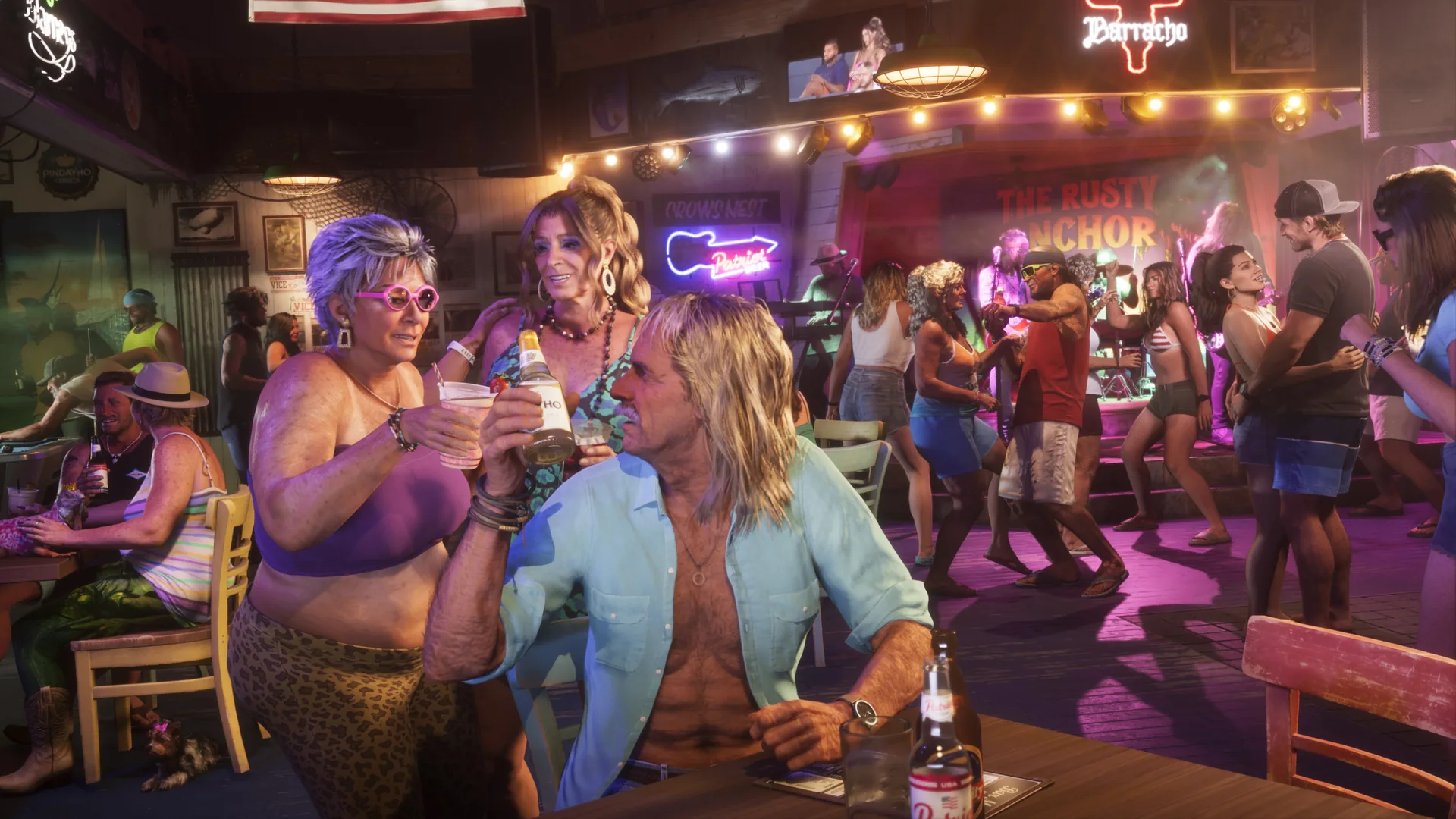
The Guardian’s Keza MacDonald previewed her Saturday feature with a newsletter built on a day at Rockstar North. Rob Nelson describes the 2015 Miami research trips as “always semi-undercover”, puts the team at almost 5,000, and shows off a six-pack of beer that sloshes when Jason runs.
- Published November 11 in the Guardian’s games newsletter, with the full feature promised for the Saturday magazine on November 14. MacDonald visited Rockstar North in Edinburgh a few weeks earlier and was shown Vice City by Rob Nelson and Jennifer Kolbe.
- The first Miami research trips were in 2015. Nelson recalls a nightclub until 4am followed by a racetrack lap with a hangover, a South Beach police ride-along and bars in the Florida Keys. “We’re always semi-undercover.”
- Almost 5,000 people worked on the game, led by a small group of long-serving decision-makers. Nelson’s own remit is design, narrative and animation with some casting; lead writer Rupert Humphries has been at Rockstar since 2008.
- Demo details: Jason eats a hot dog, bites a doughnut while sipping a beer, hikes a six-pack into the crook of his arm when he runs, and Nelson was bothered by a security guard’s foot placement during a jewellery store stick-up.
- On a GTA outside America: “Never say never, but there’s still so much to do in America.”
A Preview of Saturday’s Feature
The Guardian’s games writer Keza MacDonald published a short piece on November 11 under the headline “How years of research built Grand Theft Auto VI’s obsessively detailed world”. It ran in the paper’s games newsletter rather than as a full feature, and it says so: the longer account of her visit arrives in the Saturday magazine on November 14. What is there already is the third serious making-of report of the autumn, after Bloomberg Businessweek’s cover story in October and the French magazine Trois Couleurs, and the first from a British newspaper.
The visit happened a few weeks before publication at Rockstar North in Edinburgh. MacDonald spent the day being driven around Vice City by Rob Nelson, one of the three heads of development, with Jennifer Kolbe, the Rockstar executive who handles publishing and has become the studio’s public voice on budgets and policy. She did not play. Like Jason Schreier before her, she watched Nelson at the controller, and most of what follows is what he chose to show.
Semi-Undercover in Miami
The research trips are the heart of the piece. Rockstar North staff first flew to Miami in 2015, a date that matches what Nelson told Bloomberg and the Trois Couleurs reporters, and the early visits were loose by design. “Before you’re doing hyper-organised research trips, you’re immersing yourself in the place and its history, the vibe of it,” Nelson says. “You see the physical places you want to move characters through, the experiences you want them to have, and the juxtaposition between the extremes of society that are in Miami.”
MacDonald asked whether anyone recognised them. “We’re always semi-undercover,” he answered. “But if you have a bunch of dorks going through a terrifying neighbourhood, you do stick out a bit.” The anecdotes that follow are the ones fans have been quoting since: a Miami nightclub until 4am, then a few hours of sleep before being driven around a racetrack with what he calls a momentous hangover; a ride-along with police in South Beach; evenings in what he describes as weird bars in the Florida Keys. “Some of our team, especially the artists, are very intrepid. They’ll go wandering in all sorts of places with their cameras. They’re fearless.”
Place First, Then Story
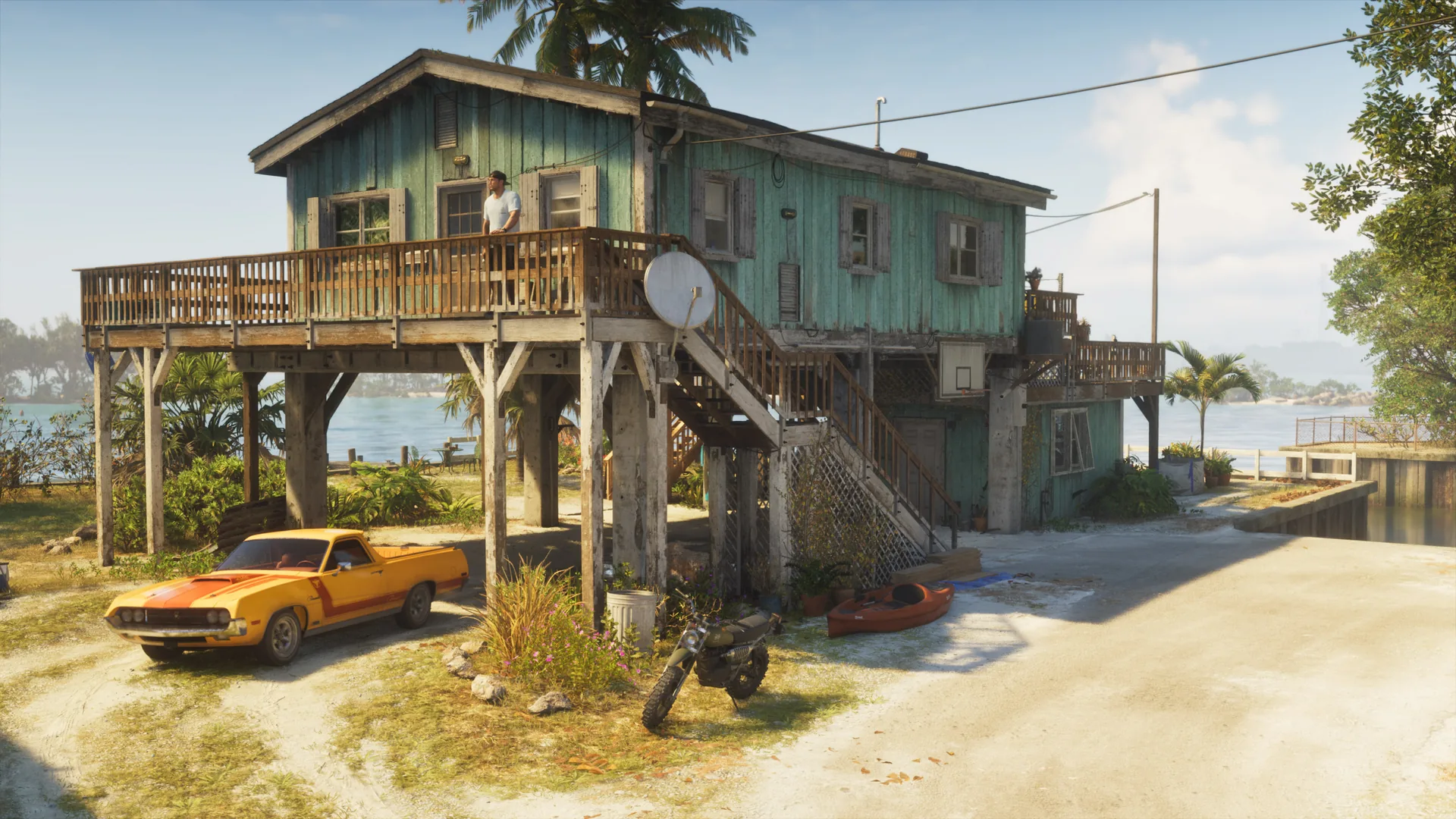
Nelson lays out the Rockstar method in one sentence, and it is the same one Rockstar North has used since GTA III: the setting comes first. Developers immerse themselves in the real version of the place, then ask what they want to do inside it and what to offer players, and only then do the writers find the story and the characters. For this game the story is a criminal couple on the run, and our development guide traces how that order of operations shaped everything from the 2014 concept map to the groceries system that was built and then cut.
Kolbe adds the Liberty City version of the same idea. During research for GTA IV, she says, “people who had lived in New York all their lives were going to places they would never go to. We then give that experience to players.” MacDonald also asked the question every British interviewer eventually asks a Scottish studio that only makes games about America: could GTA ever leave it? “Never say never, but there’s still so much to do in America,” Nelson said. On whether being outsiders helps: “I think we’re all outsiders to this version of America. It doesn’t matter where you live, no one experiences the America that we’re portraying here in its fullness.”
A Hot Dog, a Doughnut and a Six-Pack
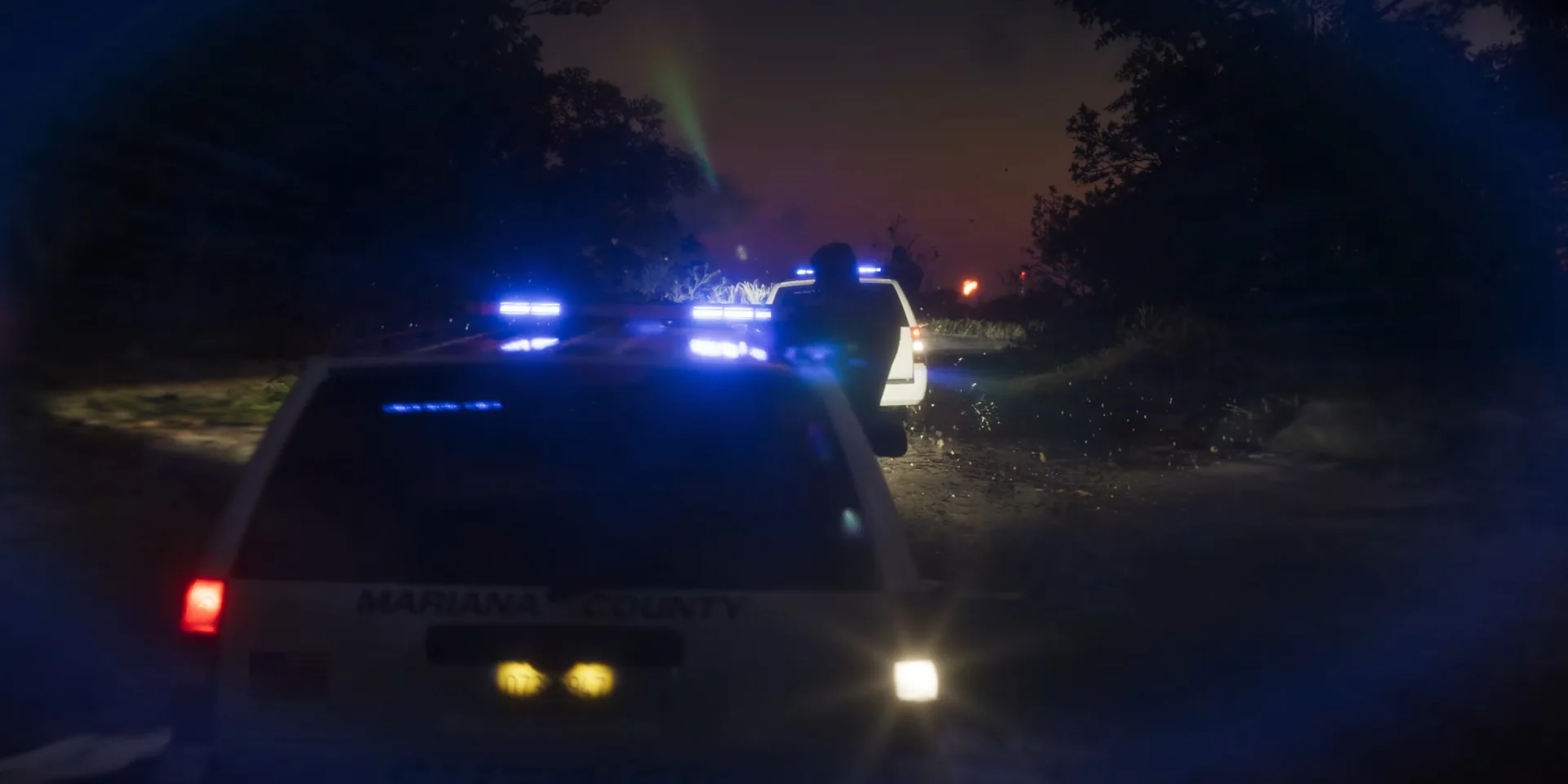
Nelson’s background is character art and animation, and MacDonald writes that it shows in what he chooses to demonstrate. The details are small on purpose. They are also the first new gameplay specifics since the Bloomberg visit, so here they are in one place.
// What MacDonald saw
Gameplay moments described in the Guardian preview. All from Nelson’s own demo, none from hands-on play.
| Moment | What it shows |
|---|---|
| Eating a hot dog | A dedicated animation for a street-food item, shown off as a point of pride rather than a menu action. |
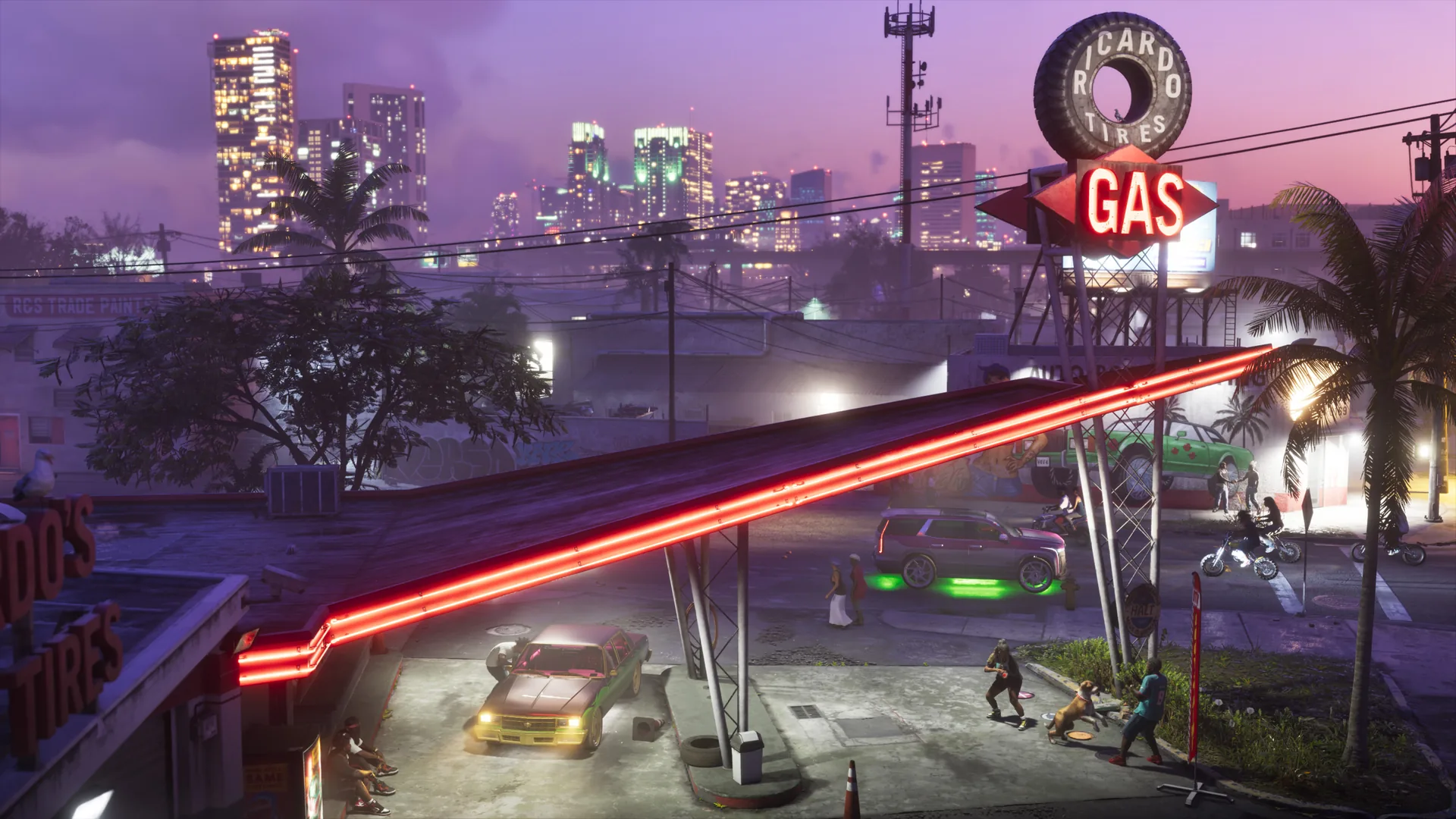
| Doughnut and beer | Walking around a gas station, Jason bites a doughnut with one hand and sips a beer with the other. Two consumables at once, no pause. |
| The six-pack | When Jason breaks into a run he hikes the six-pack of beers into the crook of his arm and the liquid sloshes in the bottles. Trailer 2 showed the same fluid simulation in a bottle; this is it carried through to a carried object. |
| Jewellery store stick-up | A robbery sequence in the demo. Nelson was briefly annoyed because one security guard’s feet were not placed right, which tells you both that stick-ups exist as scripted scenes and how the leads are still looking at the game. |
| Fridges and flyers | MacDonald lists the insides of fridges, flyers on cafe walls and street art among the detail layers, which lines up with Nelson’s remark to Bloomberg that a groceries system was built before being cut. |
MacDonald’s own verdict on the detail is blunt: it is “simply out of reach for any other game developer” because of Rockstar’s money, its time, and the patience of Take-Two. That is the same conclusion Schreier reached, and it is worth noticing that two reporters given the same guided tour a few weeks apart came away pointing at the same explanation.
Almost 5,000 People, a Handful of Decision-Makers
The headcount is the piece’s hardest number. MacDonald puts the team at almost 5,000, a step up from the roughly 4,710 staff across 12 offices that Bloomberg reported for August 2026 and almost double the 2,441 Rockstar employed when Red Dead Redemption 2 shipped. Whether the difference is growth, rounding or a wider definition of who counts is not spelled out, so we are keeping both figures in the development guide with their sources attached.
Above that workforce sits a small group of people who have been at Rockstar for a very long time. Lead writer Rupert Humphries joined in 2008, the year GTA IV shipped. Each lead owns the parts of the game they are best suited to and care about most, which for Nelson means design, narrative and animation with a little casting. “The game is so vast that no one person could hold enough of it in their heads,” he told her. Read alongside Take-Two’s statement this week that development is complete, it is a picture of a studio that has finished something no single person inside it has seen whole.
What Saturday Might Add
The newsletter is explicit that it is the trailer for the main event. The Saturday magazine feature on November 14 should carry the longer conversation about effort and motivation, more of what MacDonald saw on screen, and whatever Kolbe said about the business side. The newsletter also promises a reader Q&A about the game in next week’s edition, which lands after launch. We will fold the Saturday material into this article rather than start another, so check back here over the weekend.
Discussion
Comments · Guardian: how Rockstar researched Vice City
No comments yet.
Loading comments…